
Engineers frequently encounter the DB37 connector when they design or maintain complex industrial systems. As a leading manufacturer, Metabee recognizes that this large D-Subminiature connector offers a high pin density. This density makes it ideal for multi-signal data transmission and robust control applications.
However, procurement managers and system integrators often wonder if all DB37 connectors share the same pinout. The short answer is no. The physical layout remains identical across all standard DB37connectors. Yet, the functional wiring depends entirely on your specific protocol.
This comprehensive guide will demystify the DB37 pinout for you. We will explore how protocols like RS-449 dictate wire assignments and explain standard color codes. Finally, we will outline best practices for custom wire harness manufacturing.
What is a DB37 Connector?
The DB37 connector belongs to the classic D-Subminiature (D-Sub) family. Engineers originally designed these connectors for robust serial and parallel communications. They feature a distinctive D-shaped metal shield. This metal shield provides mechanical support, ensures correct orientation during mating, and screens against electromagnetic interference (EMI).
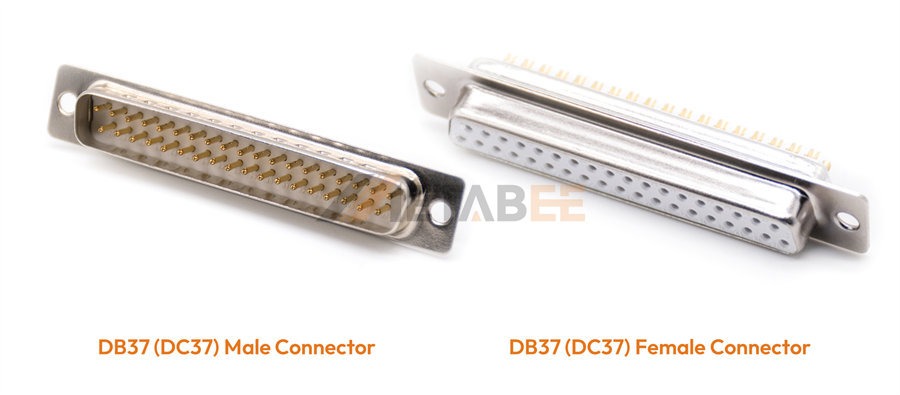
Metabee DB37 / DC37 Connectors
While the industry widely uses the term "DB37," its technically accurate engineering name is the DC37. In the standard D-Sub naming system, the first letter "D" denotes the connector family. The second letter represents the specific metal shell size. A 37-pin connector utilizes a "C" size shell. Therefore, "DC37" is the precise term. However, the market began calling nearly all D-Sub connectors "DB" due to the massive historical popularity of the 25-pin DB25.
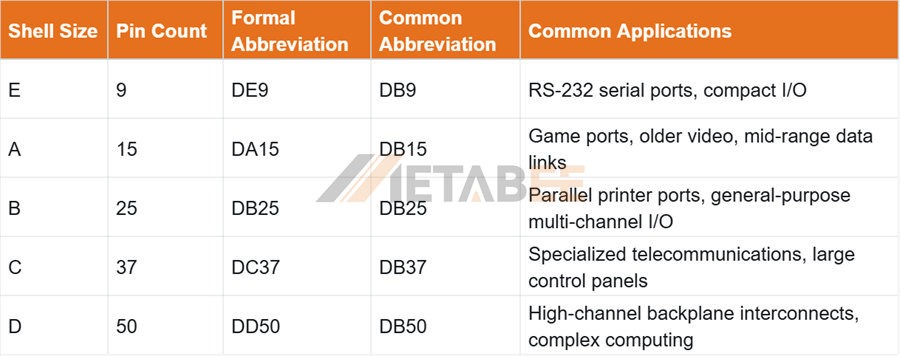
The "37" indicates the total number of pins or sockets. As a standard density D-Sub connector, the DB37 houses 37 contacts arranged in two parallel rows. It features a standard pin pitch (spacing) of 2.77mm. This exceptionally high pin count makes the DB37 perfect for applications that must transmit multiple signals simultaneously through a single, secure connection point.
Because of this high capacity, you will frequently find DB37 connectors in these primary industrial applications:
Data Acquisition (DAQ) Systems: Transmitting multi-channel analog and digital I/O signals simultaneously.
Telecommunications & Networking: Serving as interfaces for enterprise serial routers and legacy PBX switches.
Industrial Automation: Handling multi-channel RS-422 and RS-485 serial communication for servo control.
Military & Aerospace: Providing secure, custom parallel data buses for telemetry and radar systems.
Related Posts:
What is D-Sub? A Comprehensive Guide to D-Sub Connectors
41 D-Sub Connector Types Explained and Selecting the Right D-Sub Connector in 3 Steps
DB37 Connector Pinout: Physical Layout vs. Functional Pinout
We must separate the physical hardware from the electrical signals to fully understand DB37 wiring.
1. The Standardized Physical Layout
Physically, every standard DB37 connector in the world follows the same geometry. It features 37 pins arranged symmetrically in two rows.
DB37 Male (Plug)
Look directly at the mating face of a male connector. You will see the top row contains pins 1 through 19, numbering from right to left. The bottom row then contains pins 20 through 37.

DB37 Female (Receptacle)
The female connector acts as a mirror image. Pin 1 sits on the top left when you look at its mating face.

This standardized physical footprint ensures any male DB37 can physically plug into any female DB37. However, the actual electrical result depends entirely on the functional pinout.
2. Protocol-Specific Functional Pinouts
Consider a standard USB cable. Pin 1 always provides VBUS, and pin 4 always acts as Ground. The DB37 connector works differently and lacks a universal functional pinout. Instead, the equipment manufacturer or the specific communication protocol dictates the exact assignment of signals like Tx, Rx, Ground, and Clock.
Let's examine a classic example of how a specific protocol dictates the DB37 pinout.
The RS-449 (EIA-449) Serial Communication Standard
Engineers developed the RS-449 standard to handle high-speed serial data transmission over longer distances using differential signaling. When you use a DB37 for RS-449, the standard strictly defines the pinout. Below is the complete RS-449 pinout reference table:
|
Pin A |
Pin B |
EIA CKT |
Description |
From DCE |
To DCE |
|
1 |
|
|
Shield |
|
|
|
2 |
|
SI |
Signaling Rate Indicator |
C |
|
|
4 |
22 |
SD |
Send Data |
|
D |
|
5 |
23 |
ST |
Send Timing |
T |
|
|
6 |
24 |
RD |
Receive Data |
D |
|
|
7 |
25 |
RS |
Request to Send |
|
C |
|
8 |
26 |
RT |
Receive Timing |
T |
|
|
9 |
27 |
CS |
Clear to Send |
C |
|
|
10 |
|
LL |
Local Loopback |
|
C |
|
11 |
29 |
DM |
Data Mode |
C |
|
|
12 |
30 |
TR |
Terminal Ready |
|
C |
|
13 |
31 |
RR |
Receiver Ready |
C |
|
|
14 |
|
RL |
Remote Loopback |
|
C |
|
15 |
|
IC |
Incoming Call |
C |
|
|
16 |
|
SR |
Signaling Rate Selector |
|
C |
|
17 |
35 |
TT |
Terminal Timing |
|
T |
|
18 |
|
TM |
Test Mode |
C |
|
|
19 |
|
SG |
Signal Ground |
|
|
|
20 |
|
RC |
Receive Common |
|
|
|
28 |
|
IS |
Terminal in Service |
|
C |
|
32 |
|
SS |
Select Standby |
|
C |
|
33 |
|
SQ |
Signal Quality |
C |
|
|
34 |
|
NS |
New Signal |
C |
|
|
36 |
|
SB |
Standby Indicator |
|
C |
|
37 |
|
SC |
Send Common |
|
|
Note:
- Signal Type: D = Data, C = Control, T = Timing
- The DB37 connector that is commonly used for RS449; Pins 3 and 21 are undefined.
- B = Return.
EIA-449 Secondary Interface
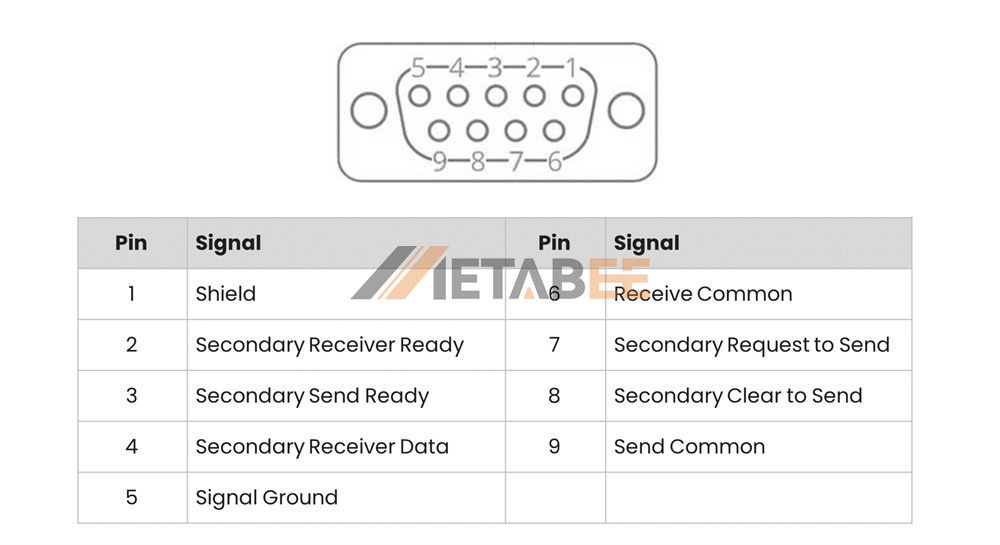
Suppose you take a DB37 cable designed for an RS-449 telecom router. You then plug it into a custom Data Acquisition (DAQ) system that uses Pin 4 to deliver 24V power. You will instantly damage the equipment. Therefore, engineers must critically verify the equipment schematic before matching a DB37 cable.
Decoding the DB37 Wire Color Code Standards
DB37 harnesses carry up to 37 distinct signals simultaneously. This volume makes identifying individual wires during termination or troubleshooting a massive challenge. The industry lacks a single universal DB37 color code. Instead, professionals rely on standardized multi-core cable schemes.
Common Color Coding Schemes
Most high-quality DB37 wire harnesses utilize one of the following color matrix standards:
- DIN 47100: This widely accepted European standard defines specific color combinations for cores up to 60 conductors. It starts with solid colors like White, Brown, Green, and Yellow. It then moves into two-color striped combinations for higher pin numbers.
- 25-Pair Telecom Color Code (Expanded): Telecommunications originally used this system. It combines Tip and Ring colors, pairing Blue, Orange, Green, Brown, and Slate with White, Red, Black, Yellow, or Violet. Manufacturers often use a 25-pair (50-wire) cable for a 37-pin connector. They safely terminate or clip the excess wires.
Custom vs. Standard Wiring in Harnesses
Custom wire harnesses often provide the best solution for OEM applications. Metabee custom DB37 harnesses allow engineers to specify exact wire gauges (AWG) for different pins. For example, you can use thicker 20 AWG wires for power pins. You can also use thinner 26 AWG shielded twisted pairs for sensitive data signals. Regardless of the chosen colors, you must maintain rigorous documentation and wiring schematics for lifecycle maintenance.
Key Industrial Applications
As we have seen, DB37 connectors remain vital in sectors requiring rugged, multi-channel connections. To summarize:
- Data Acquisition (DAQ) Systems: Used heavily by brands like NI to transmit analog inputs/outputs (AI/AO) and digital I/O signals securely.
- Cisco Serial Routers: Used in enterprise network equipment to convert signals to V.35, X.21, or other Wide Area Network (WAN) protocols.
- Multi-channel RS-422 / RS-485 Systems: Used in automation control cabinets to centralize the control of multiple servo motors or sensors.
- Legacy Telecom & PBX Switches: Utilized by technicians for alarm aggregation cables or multi-channel voice control interfaces in server rooms.
- Military & Aerospace (MIL-DTL-24308): Specified by aerospace engineers for avionics, radar arrays, and missile testing systems requiring military-spec durability.
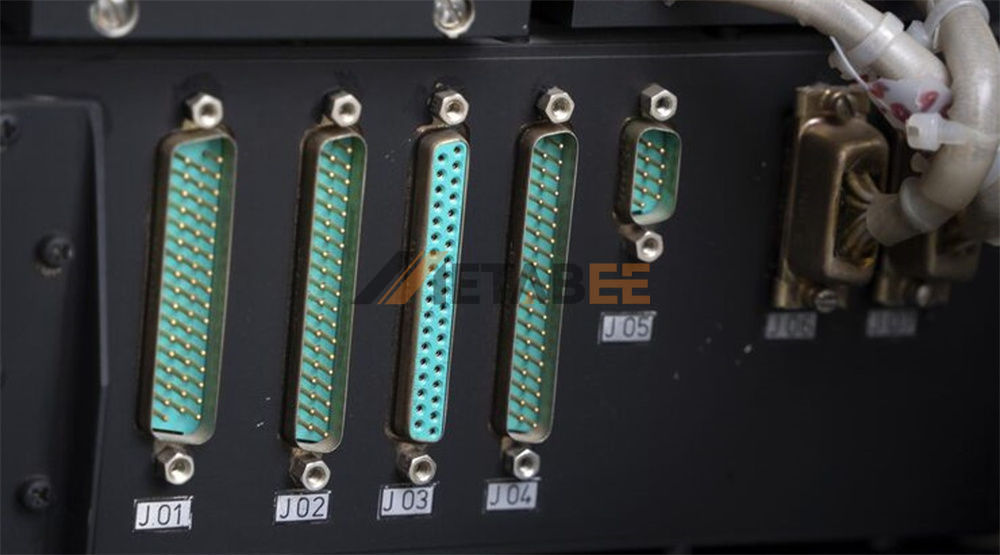
Best Practices for DB37 Termination
You must do more than just get the pinout right to ensure DB37 connection reliability. Your assembly techniques must strictly align with industry standards like IPC/WHMA-A-620.
- Crimping vs. Soldering: Solder-cup DB37 connectors work great for prototyping. However, automated crimp-and-poke contacts provide superior mechanical strength and consistency for mass-produced B2B wire harnesses.
- EMI/RFI Shielding: Thirty-seven unshielded wires can act as a massive antenna for electromagnetic interference. Therefore, factory environments require fully shielded cables coupled with metal or metallized plastic DB37 backshells.
- Strain Relief: You must install proper strain relief at the cable exit. This prevents mechanical stress from breaking the delicate solder joints or crimps inside the housing.
Conclusion
The DB37 connector serves as a highly versatile component. It offers 37 channels of data and power transmission. However, this flexibility also creates a dangerous trap. You can never assume two DB37 cables function identically just because they share a physical appearance. You might wire an RS-449 serial link or design a custom DAQ interface. In either case, you must strictly adhere to the equipment's functional pinout and standardized color coding.
Need a reliable partner for your complex connectivity projects? Look no further than Metabee for your custom cable needs. We build custom DB37 wire harnesses to your exact specifications and validate them with rigorous testing. Contact our engineering team today to request a quote or an engineering sample. Order your custom DB37 cables now to ensure your industrial systems stay securely connected!
Related Products
Frequently Asked Questions (FAQs)
Q: Is the DB37 male pinout identical to the female pinout?
A: No, they act as mirror images of each other. When you face the mating side, Pin 1 on the male plug sits on the top right. Pin 1 on the female receptacle sits on the top left. You must carefully verify orientation to avoid wiring errors.
Q: Does a universal DB37 wire color code exist?
A: No single universal color code exists for DB37 connectors. Industry professionals rely on multi-core cable schemes like DIN 47100 or the 25-pair telecom standard. You should always consult your specific cable's datasheet or wiring schematic.
Q: What distinguishes a DB37 connector from a DC37 connector?
A: They refer to the exact same physical connector. "DC37" serves as the technically accurate engineering term, where the "C" denotes the specific shell size. The industry simply adopted "DB37" out of habit.
Q: How much current can a standard DB37 connector carry?
A: A standard DB37 connector typically handles up to 5 amps per pin. However, the actual capacity depends heavily on the attached wire gauge (AWG) and the manufacturer's specific rating.
Q: Can I use a generic DB37 cable for an RS-449 application?
A: No, you cannot. You must use a cable specifically wired for the RS-449 protocol. A generic cable might feature a completely different functional pinout. This mismatch can cross power lines with data lines and instantly damage your equipment.
