
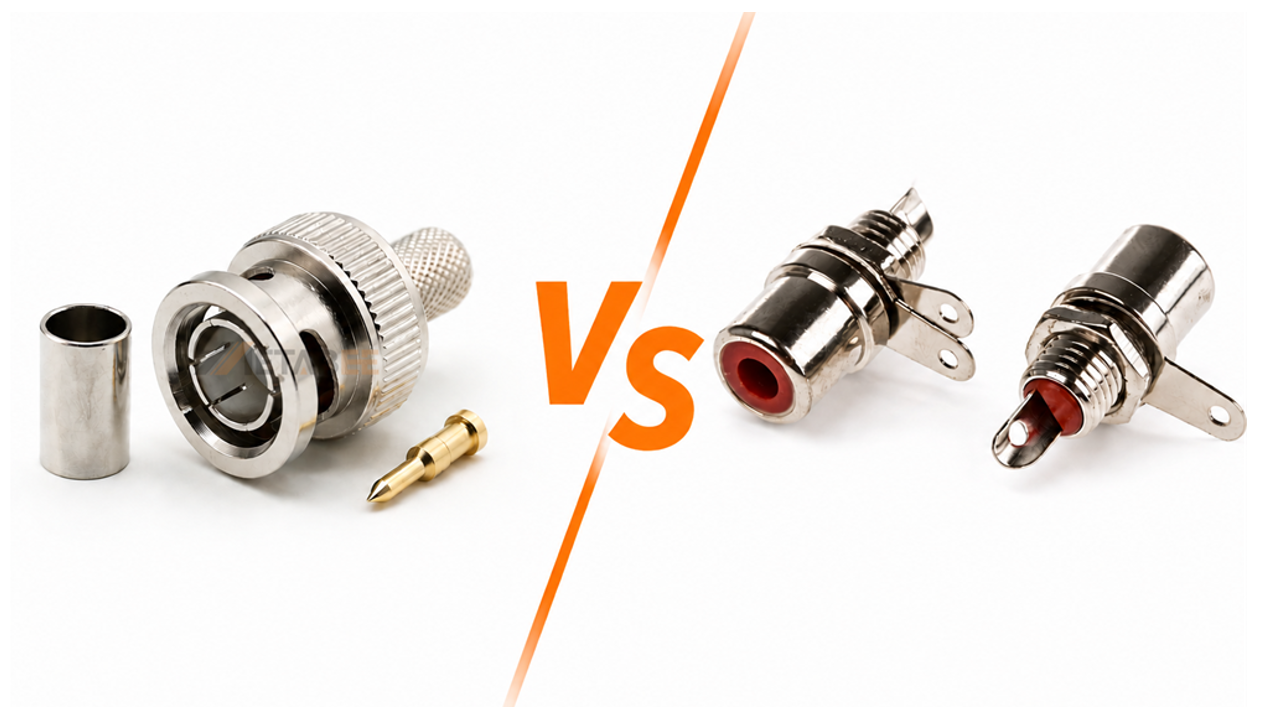
BNC and RCA are two widely used coaxial connectors for video, audio, and signal transmission. Although they serve similar applications, they differ significantly in connection methods, signal performance, impedance, and durability. This article provides a comprehensive comparison of their core features and use cases to help engineers and buyers select the right connector for their needs. For high-frequency, professional, and signal-critical applications requiring BNC locking mechanisms, METABEE provides premium connector solutions engineered for reliability.
Overview of BNC and RCA Connectors
Before comparing BNC and RCA connectors, it is important to understand their basic definitions and key features.
What Is a BNC Connector?
A BNC (Bayonet Neill–Concelman) connector is a miniature coaxial connector engineered for professional RF, video, and data communication systems. Its hallmark is a bayonet locking mechanism, which ensures a secure, vibration-resistant connection that prevents accidental disconnection. BNC connectors are available in both 50-ohm and 75-ohm impedance variants, making them ideal for high-frequency applications that demand signal integrity and a stable connection.
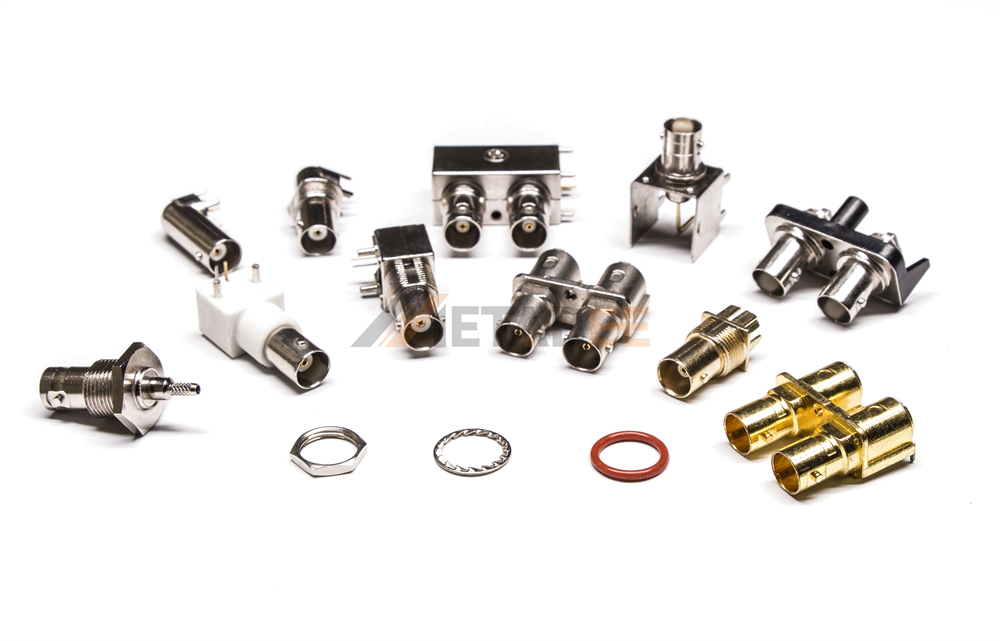
Related Post: What is a BNC Connector? The Ultimate Guide to Types, Uses & Specifications
What Is an RCA Connector?
An RCA (Radio Corporation of America) connector is a standard interface primarily used for transmitting analog audio and video signals. It features a straightforward push-fit design, allowing for effortless mating in home entertainment and consumer electronic setups. Due to their simple construction, low manufacturing costs, and broad compatibility, RCA connectors are the go-to solution for applications where high-frequency shielding and locking stability are not the primary requirements.
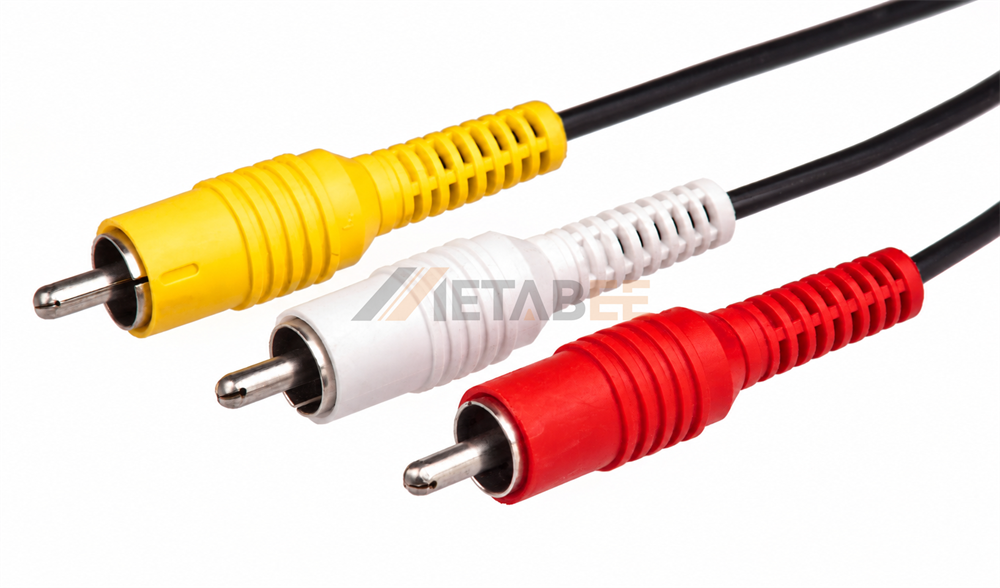
RCA Connectors
BNC vs RCA: Key Differences and Technical Comparison
Although both BNC and RCA connectors are widely used for signal transmission, they serve distinct operational requirements. When choosing the right solution for your project, you need to evaluate their core differences: connection design, cost and durability, signal performance, impedance, frequency, and applications.
Connection Mechanism and Design
The design of BNC connectors centers on a secure bayonet locking mechanism. Structurally, two metal lugs on the socket interlock with spiral slots on the plug's outer shell. To connect, you need to push the plug inward and give it a quarter-turn, locking the jack’s metal lugs firmly into the plug's slots. This creates a solid physical bond that resists accidental cable tugs. To disconnect, simply twist back and pull away—a reliable mechanism favored by technicians in high-vibration industrial environments.
In contrast, the RCA connector relies entirely on a push-fit insertion. Structurally, the RCA plug consists of a central pin surrounded by a ground sleeve, which slides directly into the socket. Because it lacks mechanical locks, the connection is held solely by friction. Consequently, light tugs or vibrations can easily loosen the plug and cause signal dropouts.
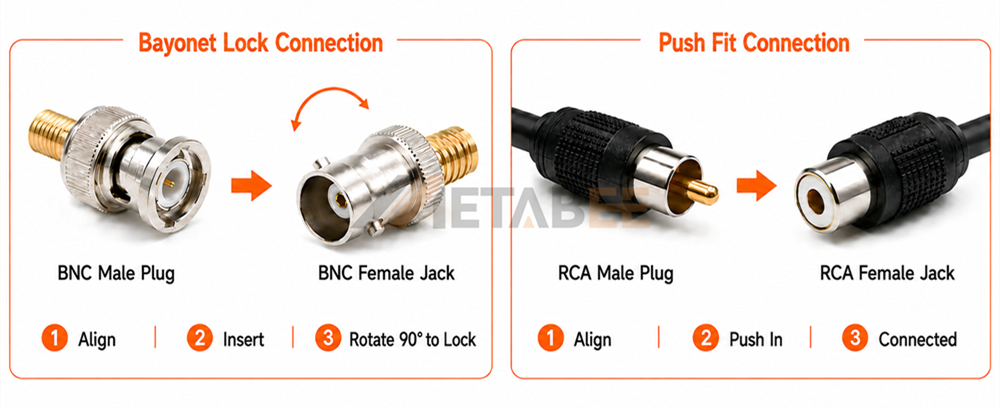
Connector Connection Mechanism Diagram
Cost and Durability
BNC connectors generally carry a higher upfront cost due to their solid metal housings and precisely machined bayonet components. Despite this initial expense, their exceptional durability significantly lowers total lifecycle costs for commercial and industrial projects. Standard-grade BNC connectors typically endure over 500 mating cycles without mechanical failure, maintaining a secure, vibration-resistant link.
In contrast, mass-produced consumer RCA connectors are inexpensive and widely available in bulk quantities. Standard RCA connectors are typically rated for around 300 mating cycles, as their friction-fit mechanism is far more susceptible to contact fatigue over time. Repeated insertion gradually loosens the internal spring contacts, which often impairs connection tightness and leads to signal instability.
Signal transmission performance
BNC connectors deliver superior signal reliability and high-frequency performance. Engineered as true RF components, they maintain controlled impedance and provide complete 360-degree coaxial shielding. This architecture prevents impedance discontinuities while blocking external electromagnetic noise, ensuring clean outputs even in high-interference environments.
In contrast, RCA connectors are mainly used for low-frequency analog transmission. They lack calibrated impedance control and suffer from incomplete shielding coverage. Their simple push-fit design creates contact gaps that allow electromagnetic interference to leak into the signal path, causing audible hum or visual noise.
Impedance
BNC connectors offer precise and strict impedance matching. Available in standard 50-ohm and 75-ohm variants, they ensure uniform impedance across the entire signal path—including the plug, jack, and cable. This accurate matching eliminates impedance discontinuities, minimizing signal reflection and standing waves over long distances.
In contrast, consumer-grade RCA hardware lacks calibrated impedance control. Even 75-ohm RCA connectors can experience slight impedance variation at the joint. However, for short home audio and standard-definition video, they deliver completely stable, high-quality performance with maximum cost efficiency.
Frequency
BNC connectors support a significantly wider frequency spectrum. Standard 50-ohm BNCs operate reliably up to 4 GHz for RF applications, while 75-ohm variants comfortably handle professional broadcast and high-bandwidth digital video up to 3 GHz.
In contrast, RCA connectors are limited to low-frequency signals and legacy analog video. Their signal performance drops rapidly as frequency rises, making them less suitable for carrying high-frequency RF or high-speed digital video.
Applications
Main Applications of BNC Connectors
BNC connectors serve demanding applications requiring stable connections, reliable signal transmission, and superior shielding. METABEE BNC connectors are suitable for applications such as CCTV, broadcast equipment, test and measurement equipment and RF systems.
- CCTV Security Systems: Surveillance camera setups use BNC connectors over coaxial cables (such as RG59 or RG6) for long-distance video transmission.
- Broadcast and Video Equipment: Professional studios rely on BNC connectors for high-bandwidth SDI video, camera synchronization, and signal monitoring.
- Test and Measurement: Laboratory instruments depend on BNC interfaces to maintain signal purity and measurement accuracy.
- Radio Frequency (RF) Systems: Controlled impedance makes BNC connectors ideal for high-frequency RF equipment. They are widely deployed in antenna links, wireless communication systems, and radio transceivers.
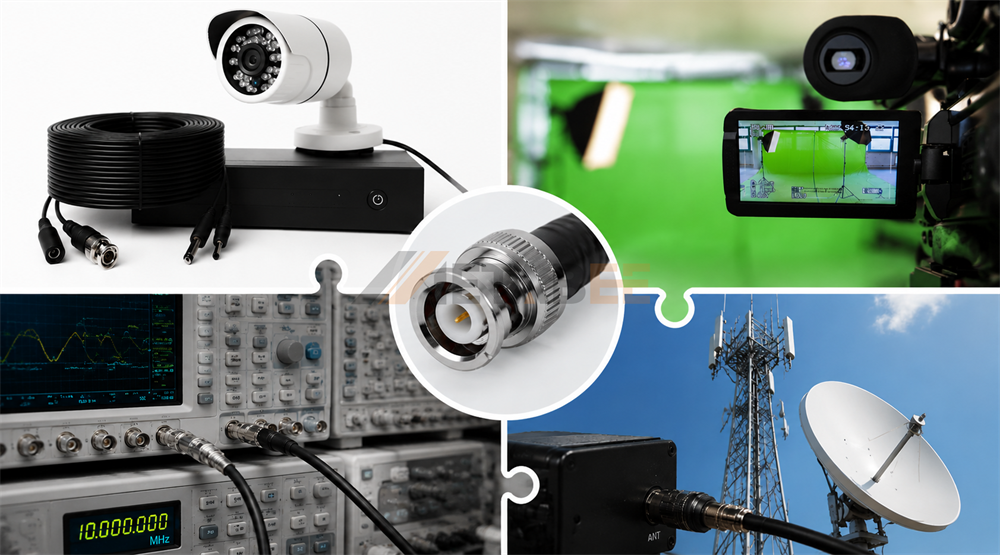
BNC Connector Applications
Main Applications of RCA Connectors
RCA connectors serve consumer electronics where low-frequency transmission and simple plug-and-play installation are required.
- Home Audio Systems: RCA connectors link components like amplifiers, stereo receivers, CD players, and powered speakers for analog audio transmission.
- Television and Video Equipment: RCA connectors transmit composite and legacy component video signals to older displays, splitting video into distinct channels for enhanced color clarity.
- Consumer Electronics: RCA connectors connect legacy devices like DVD players, retro gaming consoles, and entry-level home theater receivers for cost-effective home entertainment routing.
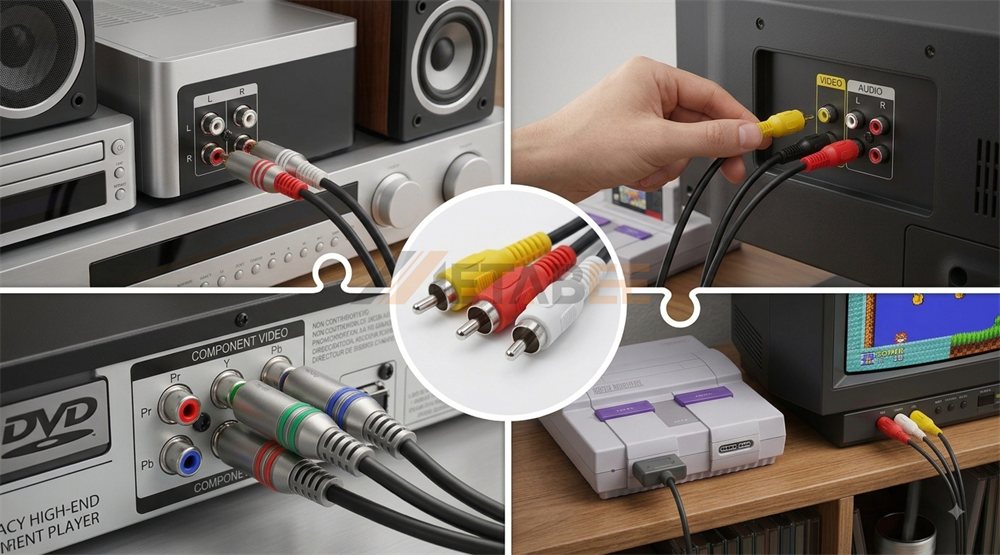
RCA Connector Applications
Comparison Table
|
Feature |
BNC Connector |
RCA Connector |
|
Full name |
Bayonet Neill–Concelman |
Radio Corporation of America |
|
Connection Mechanism |
Bayonet locking |
Push-fit |
|
Main applications |
Professional video, RF, testing |
Home audio, consumer AV, S/PDIF |
|
Impedance |
50Ω / 75Ω |
Uncontrolled |
|
Frequency capability |
Up to 4 GHz |
Low-frequency |
|
Shielding |
Full |
Partial |
|
Signal quality |
Excellent |
Good for basic use |
|
Durability |
≥ 500 mating cycles |
About 300 mating cycles |
|
Ease of Use |
Two-step: push-and-twist |
Single-motion: push-fit |
|
Cost |
Higher |
Lower |
BNC vs RCA: Pros and Cons
Evaluating the strengths and limitations of each connector clarifies why they serve distinct markets. Choosing the right connector depends on signal demands, physical environment, budget, and performance needs.
Pros and Cons of BNC Connectors
Pros of BNC Connectors
- Secure Locking Mechanism: The twist-lock bayonet design prevents accidental disconnections under vibration or physical pull.
- Precise Impedance Matching: BNCs come in strict 50Ω and 75Ω designs to prevent signal reflections.
- Superior EMI Shielding: Full 360-degree continuous coaxial shielding protects signals against external radio frequency and electromagnetic interference.
- High Versatility and Durability: Supporting over 500 mating cycles, BNCs offer long-term mechanical endurance. They are widely used across broadcasting, aerospace, and test equipment.
Cons of BNC Connectors
- Higher Cost: Precision engineering, internal dielectric insulators, and complex metal locking parts make BNC connectors noticeably more expensive than basic RCA connectors.
- Two-Step Manual Engagement: The bayonet lock requires precise rotational alignment and a quarter-turn twist to secure. This prevents quick single-motion blind insertion when working behind tight equipment racks.
- Larger Physical Footprint: BNC connectors occupy significantly more panel and PCB space than RCA connectors. This size limitation restricts port density on compact home devices or thin hardware.
Pros and Cons of RCA Connectors
Pros of RCA Connectors
- Cost-Effective Design: Simple stamped-metal construction makes RCA connectors inexpensive to mass-produce.
- Single-Motion Push-Fit Simplicity: The push-fit mechanism allows immediate, tool-less connection.
- Universal Consumer Adoption: Decades of industry standardization make RCA ports ubiquitous on home electronics.
Cons of RCA Connectors
- Lower Mechanical Stability: Lacking a physical locking mechanism, push-fit connections easily loosen under tension or movement.
- Uncontrolled Impedance and Bandwidth: Non-standard impedance and partial shielding cause rapid signal attenuation at higher frequencies.
- Limited Physical Durability: Friction-fit outer ground rings gradually lose clamping force from contact fatigue over repeated use, leading to a shorter connector lifespan than industrial standards.
Comparison Table
|
Connector |
Pros |
Cons |
|
BNC Connector |
• Secure Locking: Twist-lock prevents accidental disconnects • Matched Impedance: 50Ω/75Ω ensures signal integrity • Full Shielding: 360-degree coverage stops EMI • High Durability: Rated for 500+ cycles |
• Higher Cost: Expensive precision construction • Two-Step Operation: Alignment and twist required • Larger Footprint: Bulkier on panels and PCBs • Over-Engineered: Unnecessary for basic home audio |
|
RCA Connector |
• Ultra-Low Cost: Inexpensive to mass-produce • Instant Push-Fit: Tool-less single-motion insertion • Universal Compatibility: Standard on consumer gear |
• No Lock: Prone to loosening and accidental pulls • Uncontrolled Impedance: High-frequency signal loss • Partial Shielding: Vulnerable to noise over distance • Contact Fatigue: Friction rings loosen over time
|
Step-by-Step Guide: How to Choose Between BNC and RCA
Balancing professional performance with budget constraints determines the right choice. BNC excels in industrial, RF, and broadcast environments, while RCA remains the standard for consumer audio.
Step 1: Define Your Usage Scenario
You should identify where the connectors will be deployed by evaluating three core questions:
- Is it for professional gear or consumer electronics?
- Is it installed in static or harsh environments?
- Is the cable exposed to movement, vibration, or tension?
BNC Choice: BNCs are ideal for professional setups, including CCTV security systems, broadcast studios, and lab testing equipment.
RCA Choice: RCAs are best suited for home entertainment systems, retro gaming consoles, and standard audio equipment.
Step 2: Confirm Signal Requirements
You must match the connector specifications to your signal type, transmission distance, and required bandwidth:
BNC Choice: BNC connectors are well suited for HD-SDI video, high-frequency RF links, and long cable runs where precise impedance control (50Ω / 75Ω) is mandatory.
RCA Choice: RCA connectors are fully adequate for short-run analog audio signals (stereo L/R) or standard-definition video.
Step 3: Assess Working Environment
Evaluate the mechanical stress and electromagnetic interference (EMI) present at the installation site:
BNC Choice: BNCs are well suited for high-vibration areas (such as vehicles or industrial workshops) or environments near power lines where continuous 360-degree EMI shielding is necessary.
RCA Choice: RCAs are appropriate for controlled, indoor home environments where mechanical strain is minimal.
Step 4: Balance Project Budget
Compare initial hardware costs against long-term operational stability:
BNC Choice: BNC connectors require a higher initial investment, but they significantly reduce system downtime and maintenance costs in commercial applications.
RCA Choice: RCA connectors deliver ultra-low upfront costs, making them ideal for budget-sensitive consumer projects.
Step 5: Verify Hardware Compatibility
Always verify native device ports, cable types, and impedance ratings before making a final purchase:
- Use native BNC or RCA connectors whenever your hardware supports them.
- Note: Adapters add another connection point, which may introduce additional contact resistance or signal loss. You should avoid mixing mismatched impedance components in RF or HD video signal paths.
Step 6: Final Selection Summary
To make your decision easy at a glance, here is a quick-reference guide for choosing the right connector:
Choose BNC if your application involves:
- Professional Applications: CCTV security networks, broadcast systems, or lab testing instruments
- High-Demand Signals: RF links, HD-SDI video feeds, or long-distance transmissions
- Harsh Conditions: Severe mechanical vibration, heavy EMI, or risks of accidental cable strain
- Performance Priorities: Twist-lock connection security and continuous shielding
Choose RCA if your application involves:
- Consumer A/V: Home audio receivers, soundbars, or retro video consoles
- Static Environments: Indoor equipment racks with no physical movement or mechanical strain
- Budget & Convenience: Low initial component cost and simple push-fit insertion.
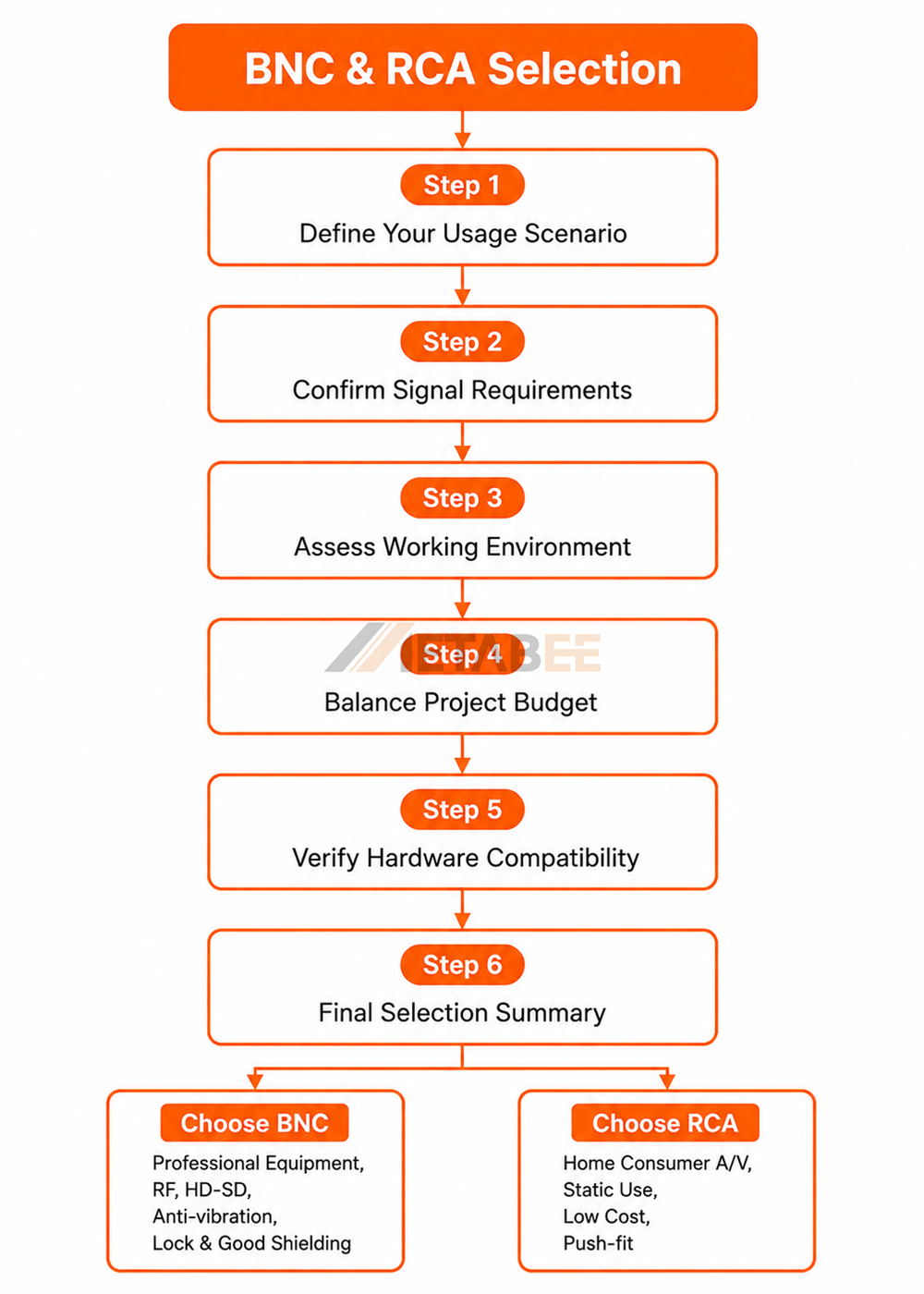
BNC and RCA Selection Flowchart
Related Products
Conclusion
Both BNC and RCA connectors excel in their respective domains. BNC offers a secure bayonet lock, precise impedance control, and robust shielding for demanding professional environments. RCA provides an affordable and simple push-fit solution for consumer audio and video applications. The right choice depends on your signal requirements, working environment, durability needs, and budget.
If you have any questions or need specific connector products, don't hesitate to get in touch with METABEE today for expert support and tailored solutions.
FAQs
Q1: What is the main difference between BNC and RCA connectors?
A: The primary difference lies in locking security, impedance control, and intended application. BNC connectors feature a twist-lock bayonet mechanism, precise impedance (50Ω or 75Ω), and robust shielding for professional systems. In contrast, RCA connectors use a simple push-fit design for cost-effective consumer audio and video applications.
Q2: Are BNC connectors always better than RCA connectors?
A: Not necessarily—it depends on your project requirements. BNC connectors are superior in mechanical stability, signal integrity, and high-frequency shielding. However, RCA connectors remain the better choice for budget-sensitive home setups that require quick, single-motion installation.
Q3: Can I connect a BNC cable to an RCA port (or vice versa)?
A: Yes, you can use a physical adapter or hybrid cable. However, you must consider impedance mismatches. While adapters bridge the physical connection, using them in precision video or RF paths can trigger signal reflections and performance degradation.
Q4: Can RCA connectors handle high-frequency or HD video signals?
A: No. RCA connectors lack strict impedance control and continuous shielding, making them prone to rapid signal loss at high frequencies. For HD-SDI video, high-frequency RF, or broad bandwidth transmissions, BNC connectors are required to prevent signal attenuation.
Q5: Are RCA connectors still relevant today?
A: Yes. While HDMI and optical interfaces have replaced RCA for digital HD video, RCA connectors remain widely used for analog audio, subwoofers, home stereos, and legacy equipment due to their low cost and universal compatibility.
