
SMA and SMB connectors are both widely used miniature coaxial RF connectors, but they are designed with different priorities in mind. SMA focuses on secure mechanical retention and higher-frequency RF performance, while SMB emphasizes compactness and fast connection and disconnection.
Although the two connectors share a similar subminiature RF design concept, they are not interchangeable. Their coupling mechanisms, physical construction, impedance options, frequency capabilities, and typical applications are different.
Introduction
Before comparing SMA and SMB connectors, it is helpful to first understand what each connector is and the basic role it plays in RF applications.
What is an SMA Connector?
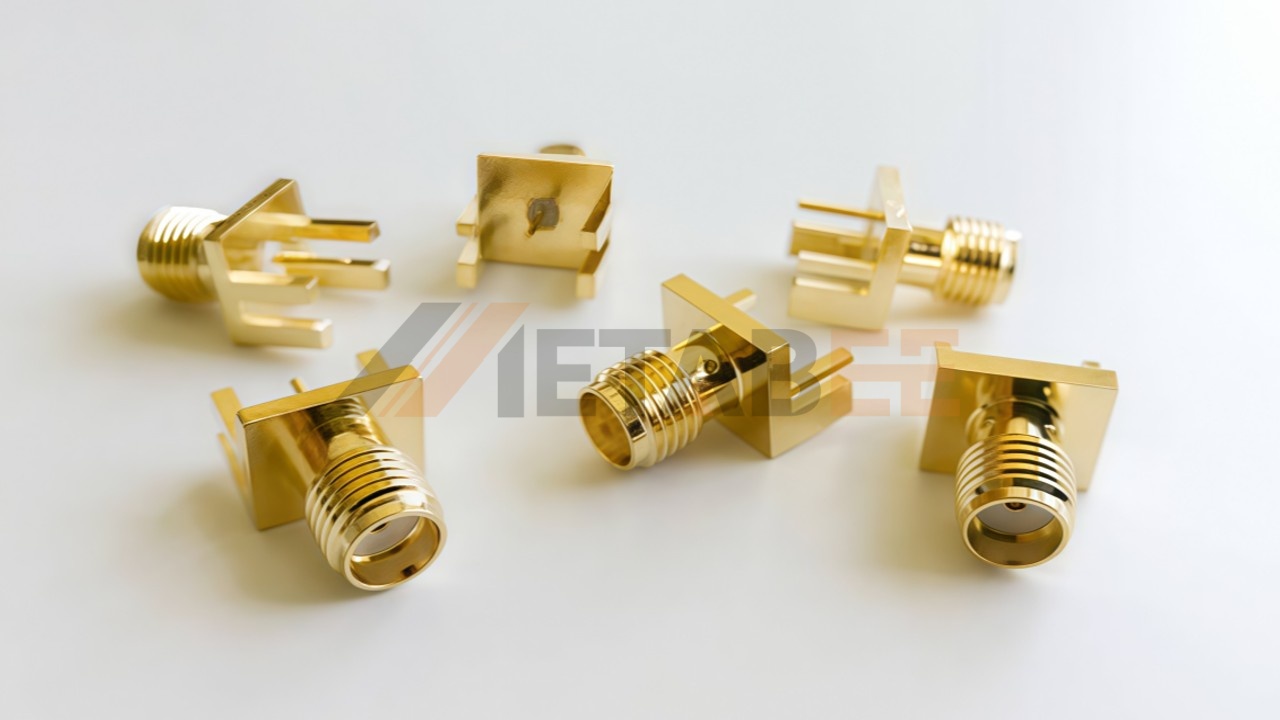
SMA stands for SubMiniature version A. It is a compact coaxial RF connector originally developed for microwave applications and has become one of the most widely used RF connector types.
The defining feature of an SMA connector is its threaded coupling mechanism. The connector is secured by rotating a threaded coupling nut, creating a firm mechanical connection between the mating components. This design provides good retention and helps the connection remain stable when exposed to vibration or mechanical movement.
Standard SMA connectors are designed for 50 Ω systems and typically support frequencies up to 18 GHz. High-frequency SMA versions are available for applications requiring higher performance, with some designs supporting frequencies up to 26.5 GHz.
What is an SMB Connector?
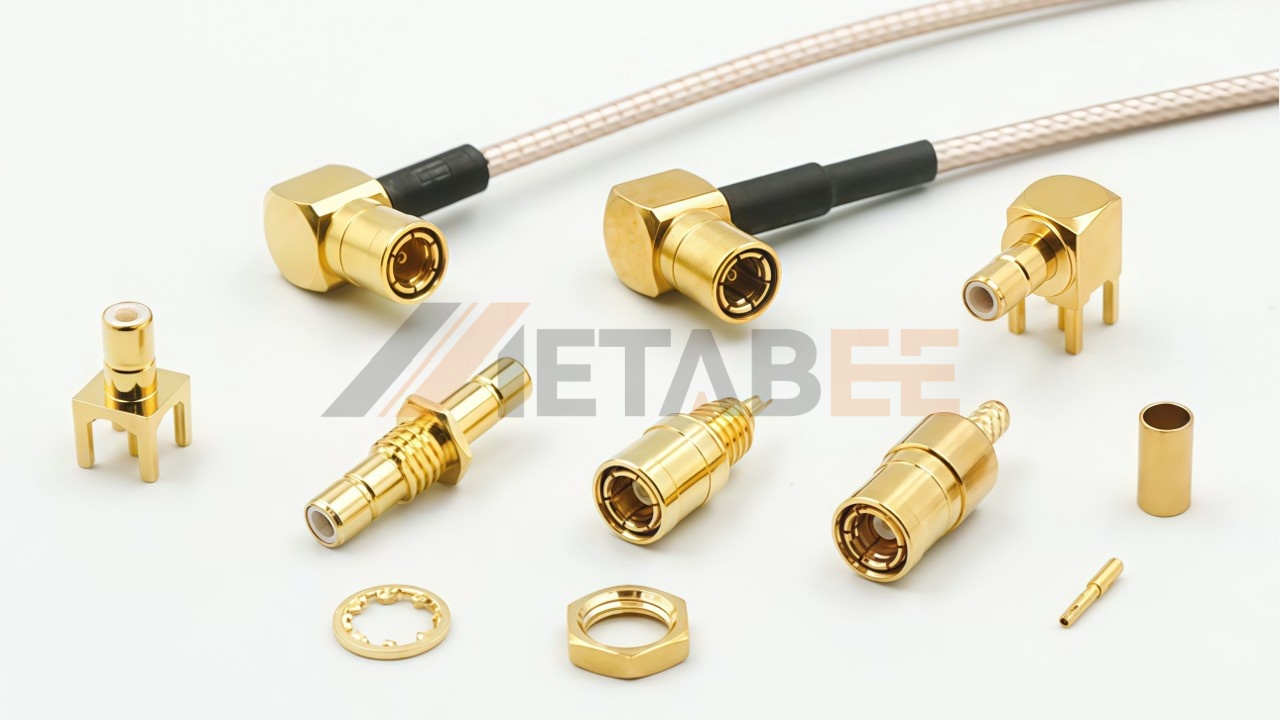
SMB stands for SubMiniature version B. It is a compact RF coaxial connector developed as a smaller snap-on alternative to SMA, with the primary goal of providing faster mating and easier installation.
Unlike SMA, SMB connectors use a snap-on coupling mechanism. Instead of rotating a threaded nut, the two connector halves are simply pushed together until the retention mechanism engages. This significantly reduces the time required for connection and disconnection.
Standard SMB designs are commonly available in 50 Ω and 75 Ω versions, with typical RF performance specified through approximately 4 GHz, depending on the specific design. Extended-range and high-frequency SMB versions are also available, with some designs supporting frequencies up to 12 GHz.
SMA and SMB belong to the same family of subminiature RF coaxial connectors and were both developed during the 1960s. The "A" and "B" designations distinguish different connector series rather than different versions of the same connector.
More specifically, SMB was developed as a smaller snap-on version or alternative to the SMA design. It retains the basic concept of a compact coaxial RF interface while changing the mechanical design to prioritize faster mating and smaller packaging.
SMA vs SMB Connector: Key Differences
The most important differences between SMA and SMB come from their mechanical design and the priorities behind that design.
SMA uses a threaded interface, while SMB uses a snap-on interface. This seemingly simple structural difference affects much more than the way the connector is installed. It also influences connection speed, mechanical retention, vibration resistance, connector size, frequency capability, and suitable applications.
Connection Design
The coupling mechanism is the most obvious structural difference between SMA and SMB.
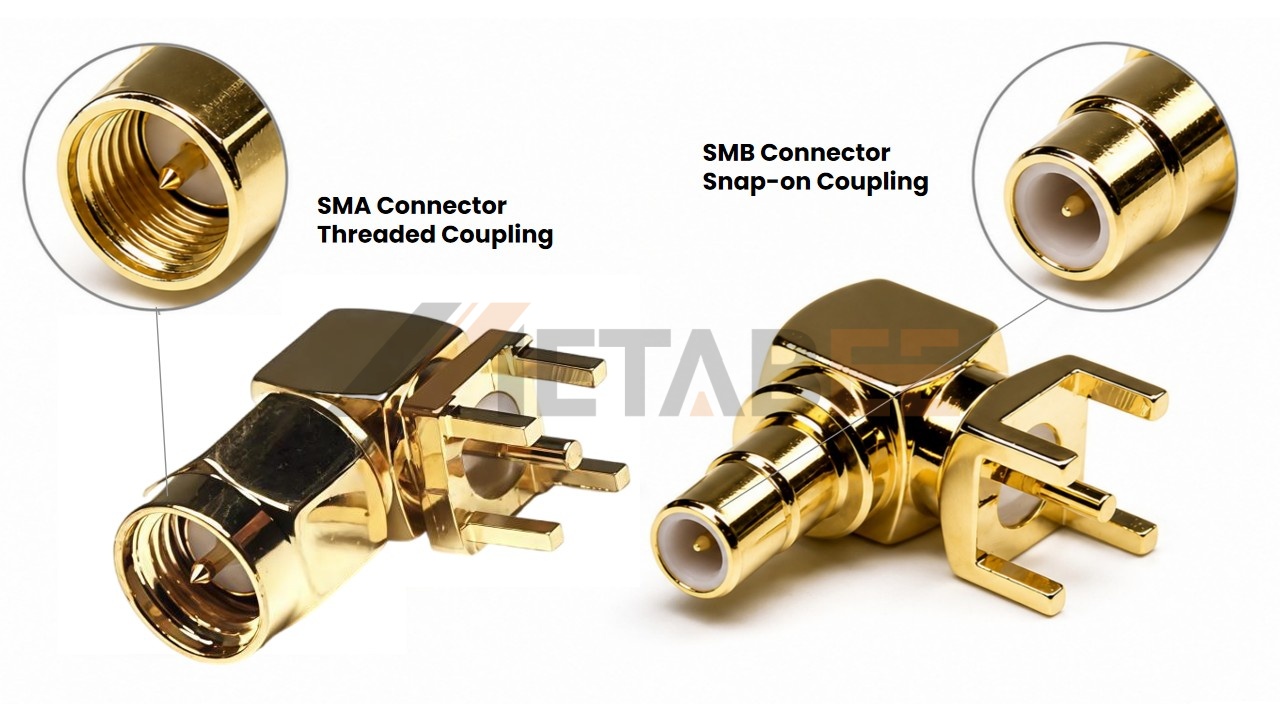
SMA: Threaded Coupling
An SMA connector uses a threaded coupling nut to secure the mating connector. The user must align the connector, engage the threads, and rotate the coupling nut until the connection is properly tightened.
This structure provides several practical advantages:
- Strong mechanical retention: The threaded connection holds the mating interfaces firmly together.
- Better vibration resistance: The connection is less likely to loosen under mechanical movement or vibration.
- Controlled mating: The threaded interface allows the connector to be securely and consistently engaged.
- Suitable for demanding environments: The mechanical structure is well suited to RF equipment exposed to vibration or repeated mechanical stress.
The trade-off is connection speed. Installing or removing an SMA connector takes longer than an SMB connector because the coupling nut must be rotated. For applications requiring frequent connection and disconnection, this can become inconvenient.
SMB: Snap-On Coupling
SMB uses a snap-on coupling mechanism instead. The mating connector is pushed directly into place until the internal retention structure snaps into position.
This design provides:
- Fast connection and disconnection
- Tool-free mating
- Easy access in compact equipment
- Reduced installation time
- Convenient servicing and testing
The disadvantage is that a snap-on connection generally provides less mechanical retention than a threaded SMA connection. SMB is therefore better suited to applications with low to moderate mechanical stress rather than environments where strong vibration or mechanical shock is expected.
This difference in coupling design also affects the mechanical retention, vibration resistance, and installation convenience of the two connectors, making each better suited to different application requirements.
Frequency Range
The difference in frequency performance becomes more noticeable as the operating frequency increases. SMA is commonly used in higher-frequency RF and microwave applications, while conventional SMB designs are generally intended for lower-frequency applications. The IEC specification for SMA defines a frequency range up to 18 GHz for Grade 1 connectors, although the actual usable frequency of a complete connector assembly also depends on its specific construction, cable, and performance requirements.
SMB connectors are commonly specified for frequencies up to around 4 GHz, while the actual range varies depending on the connector design.
|
RF Performance |
SMA |
SMB |
|
Typical Frequency Range |
Up to 18 GHz(Standard) Up to 26.5 GHz(High Frequency) |
Up to 4 GHz(Standard) |
|
High-Frequency Capability |
Higher |
More Limited |
|
Signal Integrity |
Well suited to high-frequency signal transmission |
Suitable within its specified frequency range |
The frequency range of a connector also affects its ability to maintain signal integrity. As frequency increases, discontinuities in connector geometry, dielectric structure, conductor dimensions, and impedance can have a greater effect on the transmitted signal. These effects may appear as increased insertion loss, signal reflections, or other forms of RF degradation.
With its design for higher-frequency operation, SMA is generally better suited to maintaining reliable RF signal transmission at higher frequencies. SMB can also provide good signal integrity, but its performance should be evaluated within the frequency range specified for the particular connector.
Therefore, when comparing SMA and SMB, frequency should not be considered simply as a maximum-number specification. The operating frequency and the signal integrity requirements of the complete RF system should both be considered when selecting the connector.
Impedance
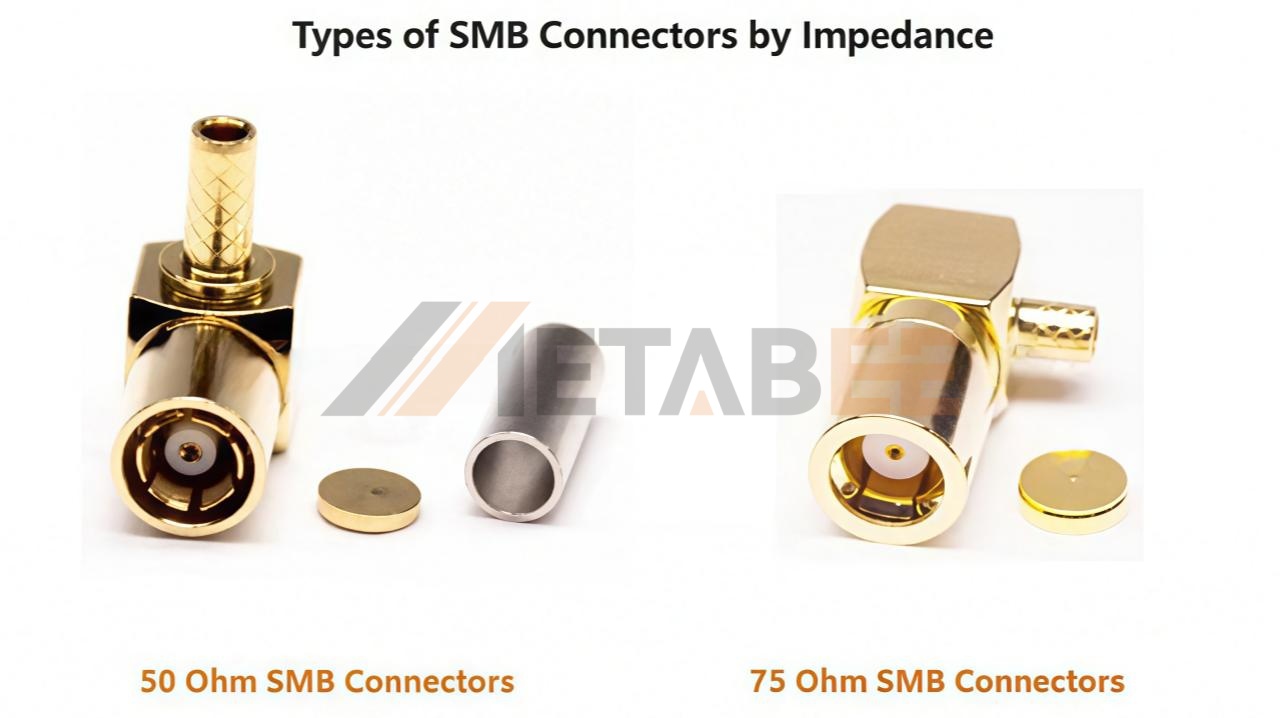
SMA and SMB differ in the impedance options they offer. Standard SMA connectors are designed around a 50 Ω characteristic impedance, while SMB connectors are available in both 50 Ω and 75 Ω configurations.
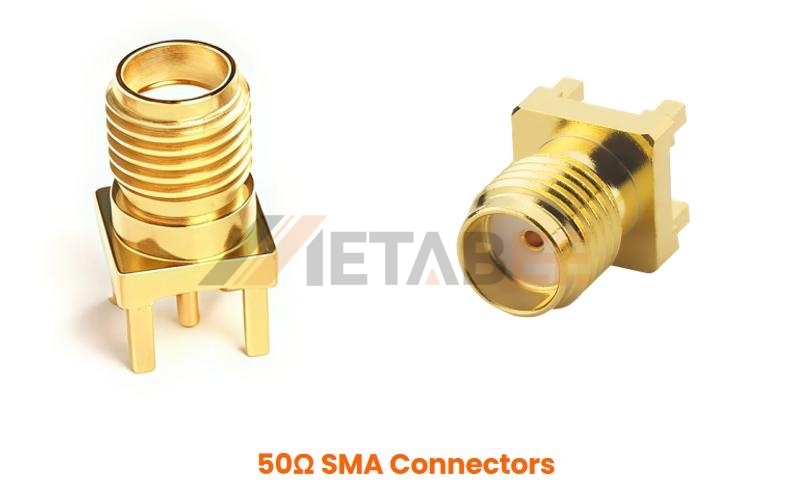
SMA: 50 Ω
SMA connectors are typically designed for 50 Ω RF systems, making them suitable for signal paths where the source, cable, connector, and load are all based on a 50 Ω impedance.
SMB: 50 Ω or 75 Ω
SMB connectors are available in 50 Ω and 75 Ω versions, providing greater flexibility for different coaxial transmission systems. The appropriate version should be selected according to the impedance of the surrounding system.
Why Does Impedance Matter?
Maintaining a consistent characteristic impedance throughout an RF signal path helps reduce signal reflections and transmission losses. If the impedance of the connector does not match the cable or other components in the signal path, part of the signal can be reflected back toward the source, potentially affecting overall signal quality.
For this reason, SMA and SMB should be selected according to the impedance requirements of the complete RF system, rather than based only on their physical compatibility.
Application
The different mechanical and electrical characteristics of SMA and SMB naturally lead to different application preferences.
SMA Applications
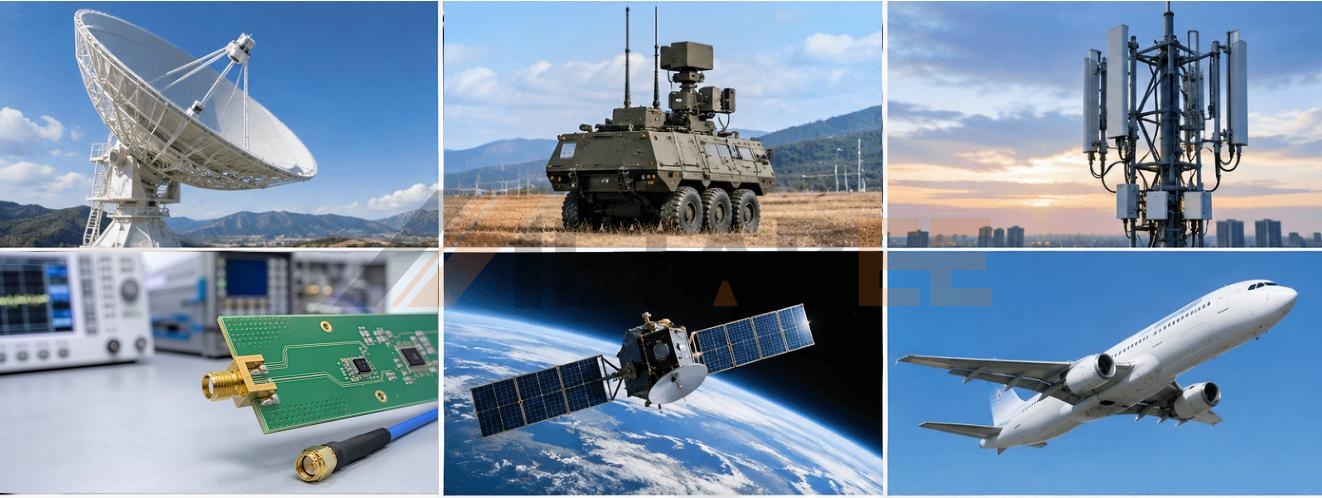
Due to their threaded coupling, strong mechanical retention, vibration resistance, and reliable 50 Ω interface, SMA connectors are commonly used where secure and stable RF connections are required. Typical applications include:
- RF Test & Measurement — Equipment requiring stable connections during signal testing and measurement.
- External Antenna Connections — RF and wireless equipment where the connector is exposed to mechanical movement or handling.
- Microwave Systems — High-frequency circuits and equipment requiring reliable RF signal transmission.
- Aerospace & Defense Systems — RF systems operating under demanding mechanical and environmental conditions.
- Long-Term RF Connections — Equipment where connectors remain mated for extended periods and frequent disconnection is not required.
SMB Applications
Due to their compact size, snap-on coupling, fast mating, and convenient installation, SMB connectors are commonly used where quick access and space efficiency are important. Typical applications include:
- Internal Device Connections — RF connections between modules, circuit boards, and other components inside equipment.
- Compact RF Modules — Space-constrained electronic assemblies where a smaller connector footprint is preferred.
- Frequently Serviced Equipment — Devices where RF connections need to be connected and disconnected regularly.
- Automotive & Communication Systems — Compact electronic systems requiring convenient RF connections during assembly or maintenance.
- GPS & Navigation Equipment — RF modules and positioning equipment where compact size and quick mating are useful.

In short, SMA is generally chosen for performance and mechanical security, while SMB is chosen for compactness and connection convenience.
If you are comparing SMA and SMB connectors for a specific RF application, Metabee can help you explore suitable connector options based on your required frequency, impedance, connection method, and installation conditions.
SMA vs SMB: Quick Comparison
|
Feature |
SMA Connector |
SMB Connector |
|
Connector Design |
Threaded |
Snap-on |
|
Impedance(Typical) |
50Ω |
50Ω/75Ω |
|
Frequency Range |
Up to 18Ghz |
Up to 4GHz |
|
Size |
Compact |
Smaller than SMA |
|
Mechanical Security |
Very secure due to threaded design |
Less secure under heavy vibration unless properly latched |
|
Durability |
Good, but threads can wear over time if over-torqued |
Good for frequent connection cycles |
|
Installation |
Threaded engagement |
Push and snap |
|
Signal Integrity |
Excellent for RF signal transmission |
Fine, but not the top pick for high-frequency precision. |
|
Application |
Antennas, RF modules, test equipment, microwave systems |
Communication equipment, GPS, automotive, internal RF connections |
The key point is that neither connector is universally better.
- If the system requires higher-frequency performance, secure mechanical retention, and a standard 50 Ω interface, SMA is usually the stronger choice.
- If the system prioritizes quick mating, compact installation, or frequent connection and disconnection, and the operating frequency is within the SMB specification, SMB may be more suitable.
It is also important to remember that the actual performance of an RF connector depends on the specific connector design, cable type, termination method, and manufacturer's specifications. Frequency limits should therefore be verified against the individual product datasheet rather than treated as universal values for every SMA or SMB variant.
How to Choose Between SMA and SMB Connectors?
Choosing between SMA and SMB depends on the requirements of the complete RF system. The following factors can help determine which connector is more suitable for a particular application.
Consider the Operating Frequency
Start by checking the operating frequency of the system.
- Choose SMA when the application operates at higher RF or microwave frequencies and requires a connector with a wider specified frequency range.
- Choose SMB when the operating frequency falls comfortably within the connector's specified range and higher-frequency performance is not required.
Match the Impedance
Check the characteristic impedance of the RF system before selecting an SMA or SMB connector. The connector impedance should match the cable and other components in the signal path.
- For 50 Ω systems: Choose a 50 Ω SMA or 50 Ω SMB connector. The choice between them can then be based on the required coupling method, available space, and installation conditions.
- For 75 Ω systems: Choose a 75 Ω SMB connector when the RF system specifically requires a 75 Ω interface.
Consider How the Connector Will Be Mated
Think about how the connector will be installed and how frequently it will be connected or disconnected.
- Choose SMA when a threaded connection and stronger mechanical retention are preferred.
- Choose SMB when fast, tool-free mating and easy disconnection are more important.
Check the Available Space
Physical space can also affect the choice.
- Choose SMB when the equipment has limited installation space and a smaller connector is beneficial.
- Choose SMA when the available space can accommodate the connector and its threaded coupling structure.
Evaluate Mechanical Conditions
Consider the amount of vibration, movement, and mechanical stress the connector will experience.
- Choose SMA when the connection needs stronger mechanical retention or is exposed to greater mechanical movement.
- Choose SMB when the connection is relatively stable and quick access is more important than maximum mechanical retention.
Verify the Complete Interface
Before making the final selection, check the connector gender, mating interface, cable type, mounting method, termination method, and environmental requirements of the specific product.
Choose the connector that matches all of these requirements rather than selecting solely by connector type or frequency rating. SMA and SMB use different mating interfaces, so they cannot be directly mated without an appropriate adapter.
Still unsure which model is right for your application? Feel free to contact the Metabee technical team. We are always here to provide professional support and help you find the right connector for your needs.
What's the Difference Between SMA and SSMA Connector?
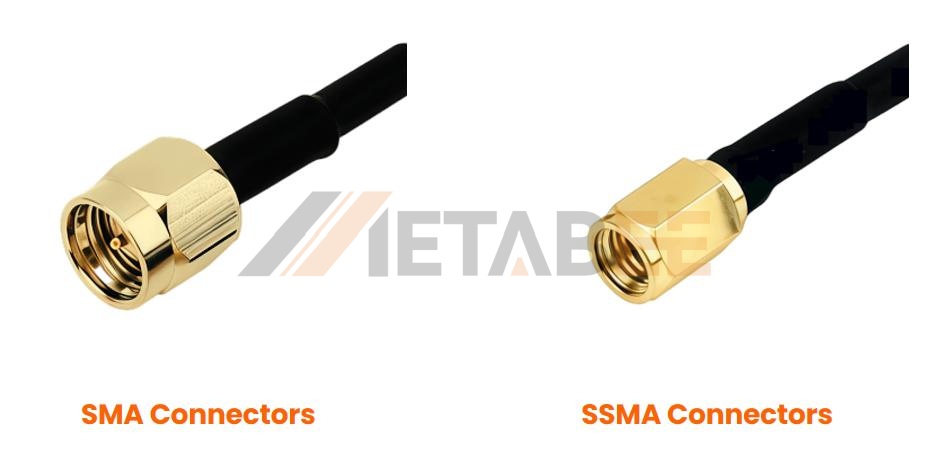
If SMA meets the required RF performance but its size is still too large for the available space, SSMA can be considered as a more compact threaded alternative. The table below highlights the key differences between the two connectors.
|
Feature |
SMA |
SSMA |
|
Full Name |
SubMiniature version A |
Subminiature SMA |
|
Size |
Compact |
Smaller than SMA |
|
Coupling |
Threaded |
Threaded |
|
Frequency Range |
Typically up to 18 GHz |
Typically up to 26.5 GHz |
|
RF Use |
RF and microwave applications |
RF and microwave applications |
|
Typical Use |
General compact RF systems |
Space-constrained RF assemblies |
* Frequency capability varies by connector design and specification. Always check the individual product datasheet for the rated frequency range.
In short, SMA and SSMA both use threaded coupling, while SSMA offers a smaller form factor and can support higher-frequency designs depending on the specific connector. The actual frequency range, impedance, and RF performance should be verified against the product specifications before selection.
Conclusion
SMA and SMB are both compact coaxial RF connectors, but they differ mainly in coupling design. SMA uses threaded coupling for secure mechanical retention, while SMB uses snap-on coupling for faster and easier mating.
When choosing between SMA and SMB, consider the operating frequency, impedance, available space, mating method, and mechanical requirements of the complete RF system. They are not directly interchangeable, so the connector should be selected according to the requirements of the signal path. Interested in Metabee? Explore our RF connector solutions or contact our technical team for professional support.
Related Products
FAQ
Q: Can SMA and SMB connectors be used in the same RF system?
A: Yes, they can be used within the same RF system, but SMA and SMB cannot be directly mated because they have different interfaces. An appropriate adapter is required when the equipment uses different connector types.
Q: Can I replace an SMA connector with an SMB connector?
A: Not as a direct replacement. Before replacing SMA with SMB, you need to check the mating interface, impedance, frequency range, available space, and mechanical requirements. If these requirements are compatible, an SMB connector may be considered with the appropriate interface or adapter.
Q: Can I use a 75 Ω SMB connector in a 50 Ω RF system?
A: A 75 Ω SMB connector should not be selected simply because it has the same physical connector type. The connector impedance should match the cable and other components in the RF signal path to help reduce signal reflections and transmission losses.
Q: Is SMB suitable for high-frequency RF applications?
A: SMB can provide reliable RF performance within its specified frequency range, but conventional SMB designs are generally specified for lower frequencies than SMA. For applications requiring higher-frequency RF or microwave performance, the specific SMA or SMB product specifications should be checked before selection.
Q: Why would I choose SMA instead of SMB?
A: SMA may be preferred when the application requires higher-frequency performance, stronger mechanical retention, better vibration resistance, or a standard 50 Ω interface. SMB may be more appropriate when fast mating, compact installation, and convenient access are more important.
Q: What should I check before ordering an SMA or SMB connector?
A: Check the connector gender, mating interface, frequency range, impedance, cable type, mounting method, termination method, and environmental requirements of your application. These specifications should be verified against the individual product datasheet before ordering.
