
The relentless march toward Industry 4.0—characterized by intelligent machines, interconnected systems, and high-speed data exchange—has placed unprecedented demands on industrial hardware. At the core of this revolution lies the need for robust, reliable, and versatile connectivity solutions that can withstand harsh factory environments while ensuring zero downtime.
Enter the M23 connector.
Far from being a simple plug and socket, the M23 is the indispensable workhorse that handles critical data signals, high-current power transmission, and hybrid combinations within demanding automation and drive technology.
This guide serves as your comprehensive resource for M23 connectors. Specifically, it details everything from the M23's fundamental technical specifications and key differentiators (like M23 signal vs. power connectors). Furthermore, it explores their pivotal role in modern servo motor connectors and complex automation systems. By the end, you will understand why the M23 is widely considered the gold standard for industrial connectivity and how to select the precise configuration for your operational needs.
What is an M23 Connector?
The Definition of M23 Connectors
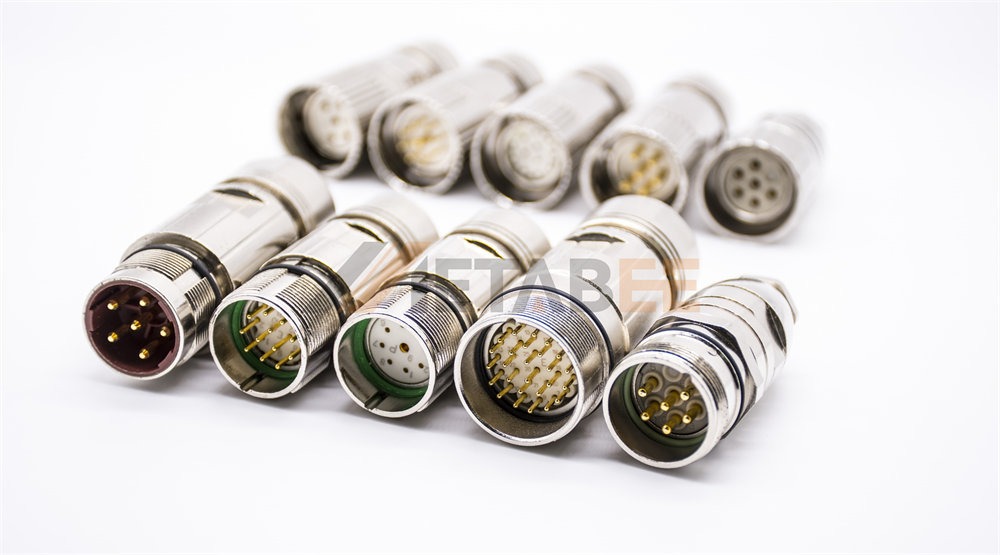
An M23 connector is a circular, metric-threaded coupling connector, standardized with a 23mm thread size, designed explicitly for industrial applications. It derives its name from the international metric threading standard, where 'M' denotes metric, and '23' refers to the nominal outer diameter of the coupling thread in millimeters. This standardization is crucial for ensuring global interoperability and ease of replacement across different manufacturer components.
Standardization and Compliance
M23 connectors are primarily governed by the IEC 61076-2-101 standard, which defines the general requirements for circular connectors used in industrial environments. Compliance with this standard ensures that the connectors meet strict criteria for safety, mechanical integrity, and electrical performance, making them reliable components in mission-critical machinery.
Key Characteristics
M23 connectors are differentiated from smaller industrial connectors (like M12) by their greater capacity and ruggedness:
- Compact, yet Robust: Despite handling high power and numerous signals, the M23 form factor remains relatively compact for installation flexibility. The housing is almost universally constructed from durable materials, typically nickel-plated brass or aluminum, offering superior mechanical protection.
- Versatility (Hybrid Options): The M23 platform is uniquely adaptable, allowing manufacturers to integrate various combinations of contacts (ranging from thin signal wires to thick power conductors) into a single housing. This enables the Single Cable Solution trend, simplifying wiring harnesses.
- High-Density Contact Layouts: The 23mm size permits a higher pin count compared to smaller connectors, making it possible to transmit multiple signals, bus communication, and power simultaneously.
The Two Main Types: Signal vs. Power
Understanding the functional distinction between signal and power M23 connectors is essential for any industrial design or procurement decision. These types are designed with fundamentally different goals, impacting their internal structure and common pin configurations.
M23 Signal Connectors
M23 signal connectors are built for precision and reliability in data transmission, encoder feedback, and control circuits where low current and voltage are standard.
- Usage Profile: Transmitting delicate data signals from sensors, resolvers, and especially, industrial encoders (both incremental and absolute) that provide position and speed feedback to servo drives.
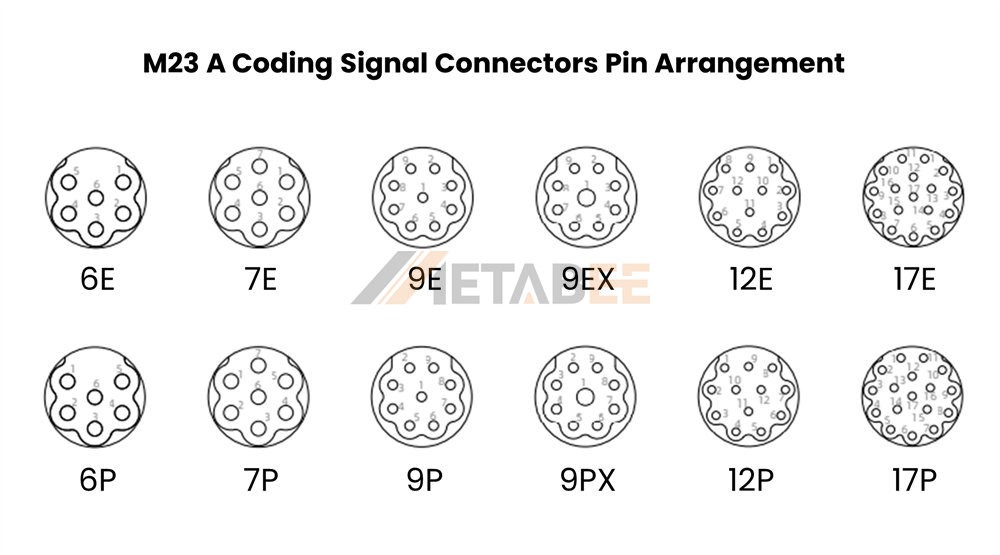
- Pin Counts: Due to the need for numerous feedback channels, signal M23s feature high pin densities, commonly seen in configurations like 6-pin, 7-pin, 9-pin, 12-pin, and 17-pin arrangements.
- Key Requirement: Superior EMC shielding is non-negotiable for signal connectors to prevent electromagnetic interference from distorting the sensitive data they carry.
M23 Power Connectors
M23 power connectors are engineered for high-current capacity, delivering the energy required to run industrial motors and drives.
- Usage Profile: Supplying operating voltage and current to servo motors and other high-demand industrial equipment.
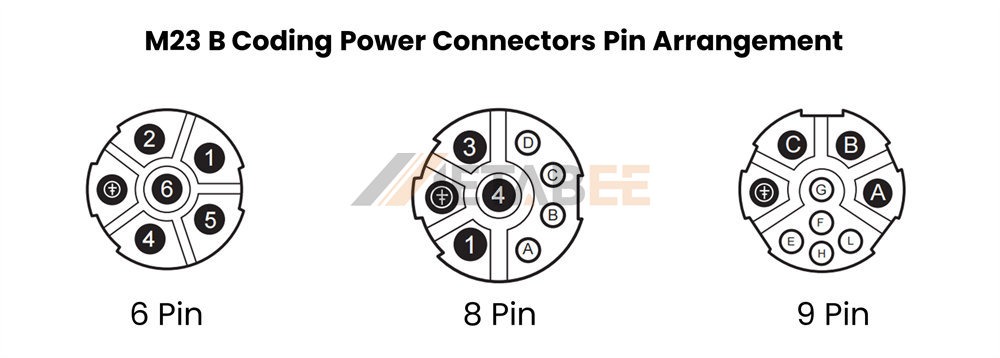
- Pin Counts & Configuration: They feature fewer, but significantly thicker, contacts to handle larger wire gauges. Common power configurations include 5+PE (three phases plus neutral and protective earth) or complex 4+3+PE arrangements (four power pins and three signal pins, for integrated brake control, for instance).
- Electrical Specifications: These connectors are rated for higher current loads, often supporting up to 30A and voltages typically up to 630V AC/DC, depending on the manufacturer and specific arrangement.
The Rise of Hybrid Solutions
Modern drive technology increasingly favors the Single Cable Solution (SCS), which is perfectly facilitated by hybrid M23 connectors. These innovative connectors combine power, signal, and often Industrial Ethernet into a single interface. This greatly reduces installation time, simplifies cable management, and lowers overall system costs while maintaining high performance and reliability.
Key Parameters and Technical Specifications
When evaluating M23 connectors, several key technical parameters define their suitability for a given industrial task. Understanding these specifications is paramount for ensuring both safety and performance.
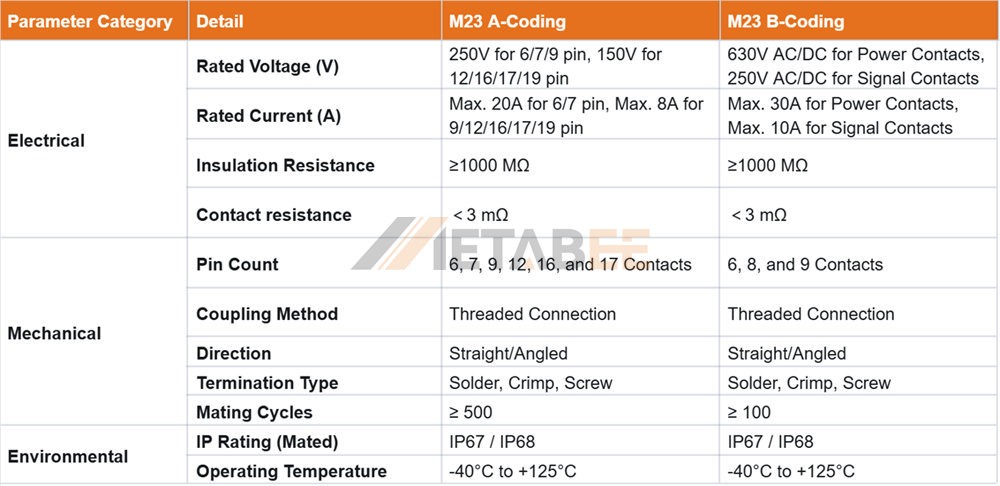
Detailed parameters for M23 connectors are shown in the table below:
Electrical Ratings
- Rated Voltage (V): Defines the maximum operating voltage the connector can safely handle without breaking down insulation. For power applications, this often ranges up to 630V.
- Rated Current (A): Specifies the maximum continuous current flow per contact. Power contacts typically handle high currents (up to 30A), while signal contacts handle low currents (often 8A or 20A).
- Insulation Resistance: Measures the effectiveness of the insulation material in preventing current leakage between contacts, ensuring signal integrity.
Mechanical and Environmental Data
- Pin Count / Pole Count: The number of contacts available. As noted, signal types have higher counts (up to 19 pins), while power types have lower counts but larger contacts.
- Termination Type: Refers to how the wires connect to the contacts: Solder (permanent, high quality), Crimp (durable, field-serviceable), or sometimes Screw terminals.
- Operating Temperature Range: The environmental temperature limits within which the connector is guaranteed to perform reliably, typically ranging from -40°C to +125°C.
- Mating Cycles: The manufacturer's specification for how many times the connector can be reliably plugged in and unplugged before mechanical or electrical degradation occurs.
Key Features & Benefits: Why M23 is the Standard
The M23's dominance in industrial automation is due to a suite of rugged features specifically engineered to overcome the challenges of a factory floor—heat, moisture, vibration, and electrical noise.
Rugged Durability and Environmental Protection (IP Ratings)
A critical factor for any industrial component is its ingress protection (IP) rating, which indicates its resistance to solids and liquids. M23 connectors typically boast:
- IP67 Rating: When mated and properly secured, the connector is protected from dust ingress and temporary immersion in water (up to 1 meter for 30 minutes). This is the standard for most machinery.
- IP68 Rating: Offers even greater protection against continuous submersion in water, suitable for demanding washdown or extremely wet environments in food & beverage or marine applications.
This robust sealing ensures that corrosive coolants, cutting oils, and high-pressure cleaning sprays do not compromise electrical conductivity.
Electromagnetic Compatibility (EMC Shielding)
The factory environment is electrically noisy, with motors, drives, and welding equipment constantly generating electromagnetic fields. High-precision signal transmission, such as encoder data, can be easily corrupted by this noise.
M23 connectors address this through 360-degree shielding. The metal housing and internal shielding mechanisms create a Faraday cage around the sensitive contacts, effectively shunting interference and noise away from the conductors. This ensures signal integrity, which is paramount for the precise positioning required by servo systems.
Secure Locking Mechanisms
Reliable mating and positive locking are non-negotiable for connectors subjected to movement and vibration.
Screw Locking (Traditional): The classic, tried-and-true locking mechanism. The robust metric thread ensures an extremely secure, high-retention connection capable of resisting high tensile loads.
Vibration Resistance and Mechanical Stability
Industrial machinery, particularly high-speed robotics and packaging equipment, generates substantial vibration. A failing connection under vibration leads directly to costly system downtime. The heavy-duty housing and secure locking mechanisms of M23 connectors are designed to absorb these mechanical stresses, preventing contact degradation, cable fatigue, and unintended unmating.
Common Applications in Industry
The versatility and reliability of the M23 connector make it a core component across numerous high-demand industrial sectors.
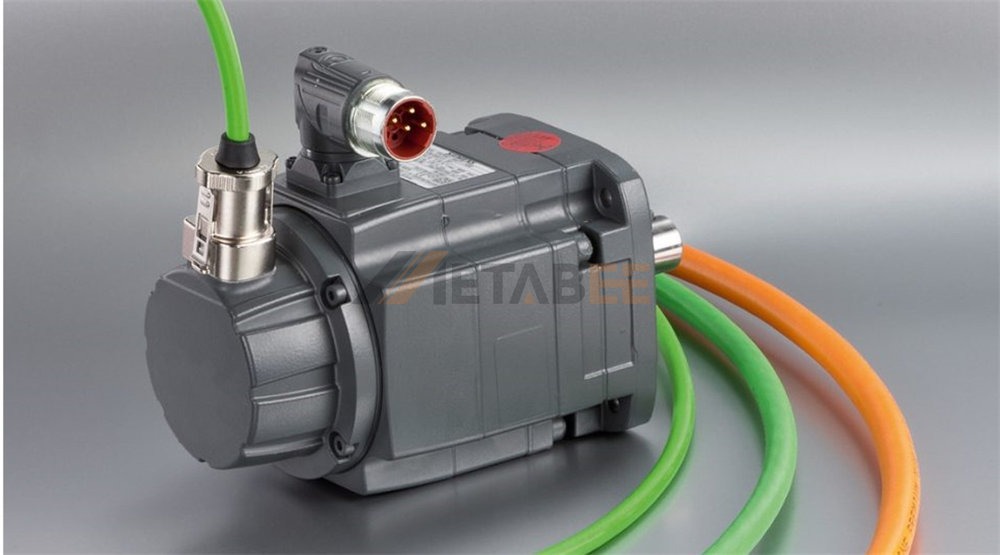
Servo Motors and Drives (The Cornerstone)
The connection between the servo motor and its drive/controller is the most common and critical application for M23s. Servo systems require two primary connections:
- Power: To supply high current to the motor windings.
- Feedback/Signal: To transmit precise position and speed data from the motor's encoder back to the controller.
The M23's ability to handle both power and highly shielded signal lines makes it the ideal interface for this pairing, facilitating streamlined integration and optimal performance.
Robotics and Automated Manufacturing
In multi-axis robots, M23 connectors are used at key articulation points and for connecting tool changers and end-effectors. Their rugged, compact design is crucial for reliable operation in dynamic, repetitive motion applications where cables are constantly flexing.

Packaging and Conveyor Systems
These systems demand continuous operation. M23 connectors provide the high-reliability link for sensors, motor control, and safety circuits, ensuring that thousands of cycles can be completed without connection failure.
Industrial Measurement and Testing Equipment
In environments requiring high data accuracy and stability, such as testing rigs or quality control stations, the M23's superior EMC shielding and contact stability ensure clean, reliable data acquisition.
6. How to Select the Right M23 Connector: A 5-Step Guide
Choosing the correct M23 variant can significantly impact system performance and longevity. Follow these five steps to ensure you select the optimal connector for your application.
Step 1: Determine the Primary Function (What is it connecting?)
The most fundamental choice is whether you require a connector for power, signal, or a hybrid combination.
- Power: Focus on maximizing current-carrying capacity and safety (PE contact).
- Signal: Focus on high pin count and maximum shielding effectiveness.
- Hybrid: Balance power capacity with signal integrity within one connector body (SCS).
Step 2: Check Electrical Specifications (Voltage and Current)
Match the connector's rated specifications to the actual load requirements of the motor or device. Over-specifying provides a safety buffer, but under-specifying leads to heat, degradation, and failure. Always verify:
- Rated Voltage: Must be equal to or greater than the system voltage.
- Rated Current (Amperage): Must be equal to or greater than the maximum continuous current draw.
Step 3: Pin Configuration and Coding
The pin count (e.g., 12-pin, 19-pin) must match the requirements of the connected device (e.g., encoder output). Furthermore, look at coding—some manufacturers use distinct mechanical keying to prevent accidental mating of incompatible power and signal versions, which is a critical safety feature.
For instance, Metabee M23 connectors often use A-Coding and B-Coding to define the two main connector types: A-Coding designates the Signal connectors, while B-Coding designates the Power connectors.
Step 4: Cable vs. Panel Mount
Determine the connector's location and role in the system:
- Cable Mount (Plug): Used at the end of a cable to connect to a machine or drive. You must specify the cable diameter range it can accommodate.
- Panel Mount (Receptacle): Designed to be fixed onto a machine housing or control cabinet wall, providing the external interface.
Step 5: Housing Type and Environmental Needs
Consider the physical constraints and environmental stressors:
- Straight Connector: Standard option, robust and simple.
- Right-Angle (Angled) Connector: Essential for installations in tight spaces where cable routing is restricted.
- Environmental Rating: Confirm the required IP rating (IP67 for general use, IP68 for continuous exposure).
Installation & Maintenance Tips
While M23 connectors are designed for ruggedness, proper installation and maintenance are key to maximizing their lifespan and ensuring system uptime.
- Proper Crimping and Soldering: Ensure contacts are terminated correctly. For crimp connections, use the manufacturer-specified tools to achieve optimal gas-tight connections. Incorrect termination is a leading cause of intermittent failures.
- Torque Tightening: Always tighten the screw locking nut to the manufacturer-specified torque value. Under-tightening risks loosening due to vibration; over-tightening can damage the thread or crush the internal seal, compromising the IP rating.
- Cable Gland Sealing: Ensure the cable gland (the part securing the cable sheath) is properly sealed to maintain the environmental integrity of the connector.
Conclusion
The M23 connector is more than just a component; it is a fundamental element driving the reliability and efficiency of modern industrial automation. Its robust construction, high power capacity, and ability to securely transmit high-speed data make it the clear choice for demanding applications, from complex robotics to mission-critical servo drive systems.
By understanding the difference between signal and power variants, recognizing the value of features like superior EMC shielding and high IP ratings, and following the proper selection process, engineers and procurement professionals can ensure their machinery operates reliably, minimizing costly downtime.
Ready to upgrade your system’s connectivity or find the perfect circular connector M23 solution for your next project? Explore our catalog of high-quality, cost-effective M23 connectors today, or contact our engineering team for a custom quote to discuss your specific industrial cable assemblies requirements.
Related Products:
Frequently Asked Questions (FAQs)
Q: What is the main difference between M23 and M12 connectors?
A: The primary difference is size and capacity. The M23 connector (23mm thread) is significantly larger and is designed for applications requiring higher current (up to 30A), higher voltage (up to 630V), and/or a higher pin count (up to 19 pins), making it the standard for servo motor connections. M12 connectors are smaller (12mm thread) and are typically used for low-power sensors, fieldbus, and Industrial Ethernet connections.
Q: Can M23 connectors be used outdoors or in washdown areas?
A: Yes, M23 connectors are designed for harsh environments. When properly mated and secured, they commonly achieve an IP67 or IP68 rating. This means they are completely dust-tight and protected against temporary (IP67) or continuous (IP68) immersion in water, making them ideal for outdoor installations, machine tool environments with coolants, and food/beverage washdown applications.
Q: What is a "Hybrid M23 Connector," and how does it benefit my system?
A: A Hybrid M23 connector combines multiple functions (Power, Signal, and often Industrial Ethernet) into a single housing and cable assembly. This configuration enables the Single Cable Solution (SCS), which reduces the number of required cable runs, simplifies installation, minimizes cable management complexity, and lowers the overall system cost compared to running separate cables for power and feedback.
Q: How important is EMC shielding for M23 signal connectors?
A: EMC (Electromagnetic Compatibility) shielding is extremely important for M23 signal connectors, particularly those connected to sensitive devices like encoders. Factory environments are filled with electromagnetic interference (EMI) from motors and drives. The M23's 360-degree shielding protects the delicate data signals from this interference, ensuring stable, reliable, and precise position feedback to the control system.
Q: Can I use crimp termination or is soldering required?
A: M23 connectors support both crimp and solder termination, depending on the specific connector series and application.
Solder termination is often preferred for fixed, high-quality connections.
Crimp termination is generally faster, requires specialized tools, and offers superior vibration resistance, making it an excellent choice for field assembly and applications subject to high mechanical stress.
