
BNC vs Coax Connectors: The Ultimate Comparison and Selection Guide
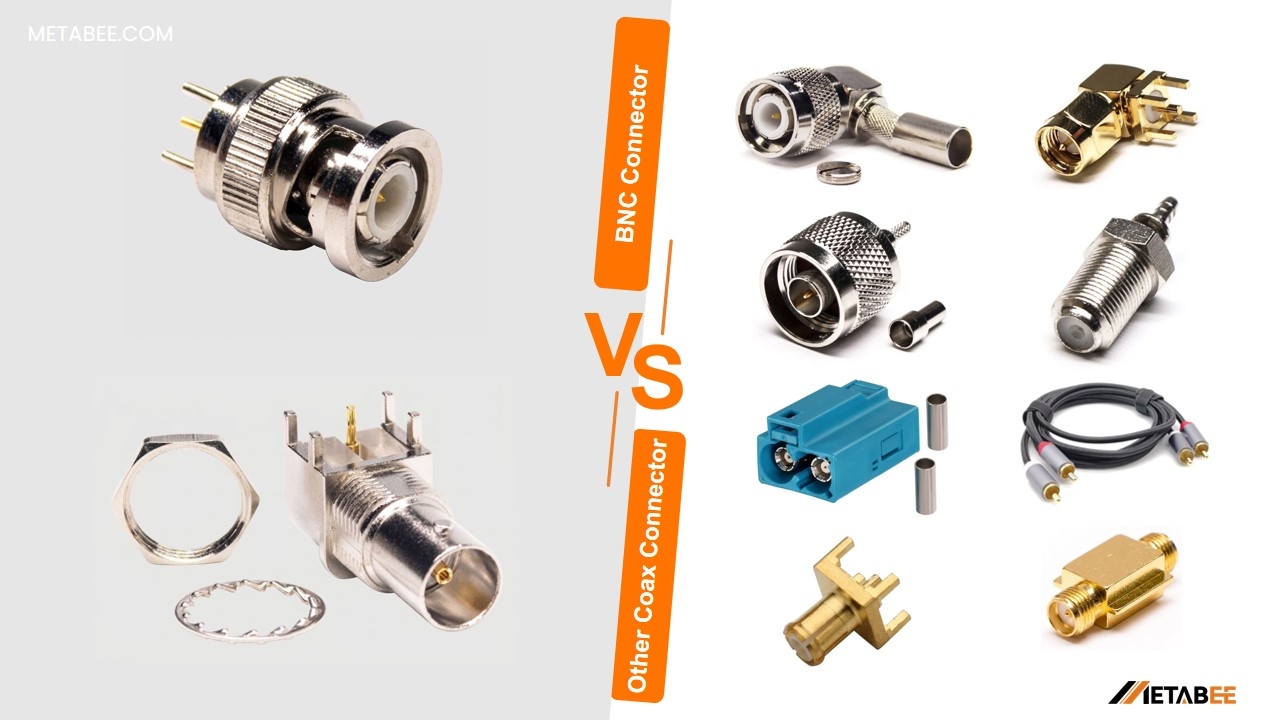
Coaxial connectors are a broad class of interfaces engineered to join coaxial transmission lines while preserving signal integrity and mechanical stability. Within this category, BNC connectors represent one specific type. Other common coaxial connector types include SMA, TNC, N-Type, F-Type, RCA, FAKRA, MCX, and MMCX, each designed for different applications and performance requirements. This guide compares BNC with 7 common coaxial connector types. Backed by METABEE’s RF engineering expertise, it helps engineers and purchasers select the ideal solution.
Coaxial Connector Fundamentals
Before comparing BNC with other connector types, it is important to understand the basic structure of coaxial connectors and the position of BNC within this broader category.
What Is a Coaxial Connector?
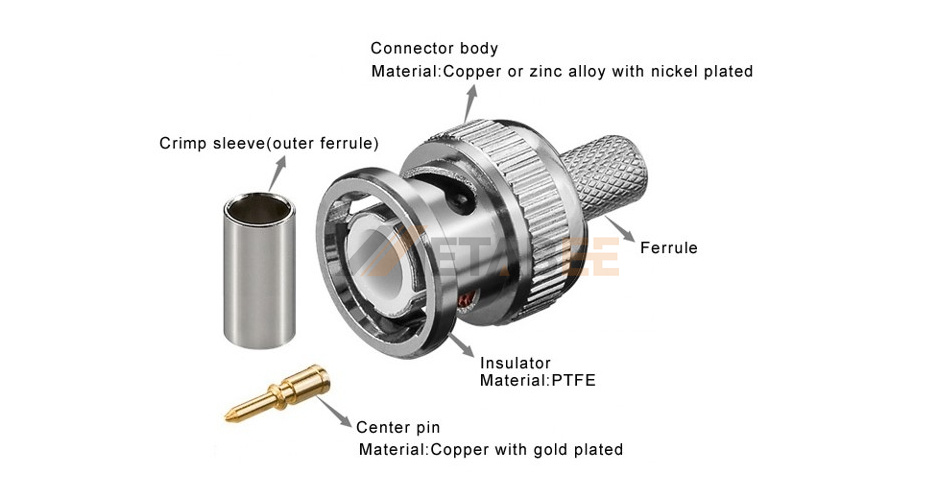
A coaxial connector is an electrical interface designed to connect coaxial cables, components, or equipment while preserving the structure and electrical characteristics of a coaxial transmission line. A coaxial connector typically includes a center contact pin, dielectric insulator, outer body, and coupling mechanism. These components help maintain signal integrity and shielding across the mating interface.
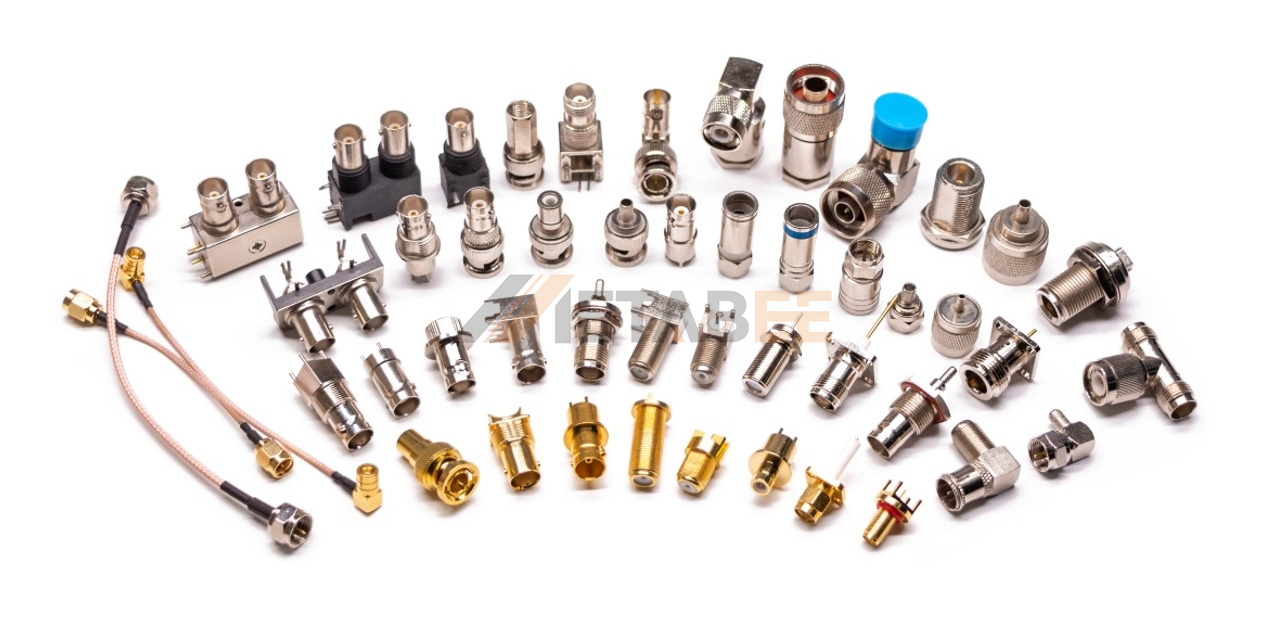
Due to these fundamental properties, coaxial connectors serve a wide range of applications, including RF and wireless communications, test equipment, broadcasting, CCTV, automotive electronics, and consumer devices. Because these diverse applications demand distinct performance capabilities, coaxial connector designs vary significantly across different product families.
What Is a BNC Connector?
A BNC connector is a miniature 50 Ω or 75 Ω RF coaxial connector featuring a quarter-turn bayonet coupling mechanism for test equipment and video systems. It typically consists of a center contact pin, a dielectric insulator, and an outer conductive body.
BNC connectors are widely used in test equipment, CCTV systems, and broadcast video electronics. They offer a practical balance of ease of use and reliable signal integrity. However, they are not suitable for every coaxial application.
Related Post: What is a BNC Connector? The Ultimate Guide to Types, Uses & Specifications
BNC vs Other Coaxial Connectors: Quick Comparison
|
Connector Type |
Coupling Method |
Frequency Range |
Impedance |
Size |
Typical Applications |
|
BNC |
Bayonet |
DC – 4 GHz |
50 Ω / 75 Ω |
Miniature |
Test equipment, CCTV, broadcast video |
|
TNC |
Threaded |
DC – 11 GHz |
50 Ω / 75 Ω |
Miniature |
RF communication, wireless systems |
|
SMA |
Threaded |
DC – 18 GHz |
50 Ω |
Sub-miniature |
Wi-Fi routers, 5G cellular, microwave systems |
|
N-Type |
Threaded |
DC – 11 GHz |
50 Ω / 75 Ω |
Medium |
Outdoor RF, antennas, base stations |
|
F-Type |
Threaded |
DC – 3 GHz |
75 Ω |
Miniature |
Cable TV, satellite receivers |
|
RCA |
Push-fit |
DC – 100 MHz |
Non-constant |
Standard |
Consumer audio and video |
|
FAKRA |
Keyed locking |
DC – 6 GHz |
50 Ω |
Miniature |
Automotive electronics |
|
MCX / MMCX |
Snap-on |
DC – 6 GHz |
50 Ω |
Micro-miniature |
Compact PCBs, IoT modules, commercial drones |
Note: The frequency ranges shown are common or typical values for standard connector configurations. Actual performance varies by connector design, interface, cable assembly, and manufacturer. As a specialized RF manufacturer, METABEE offers custom-engineered BNC and coaxial connector variants with high-frequency limits, specialized plating, and waterproof sealing.
Group 1: High-Frequency & Rugged RF Communication Connectors
Standard RF connectors—such as TNC, SMA, and N-Type—share coaxial fundamentals with BNC. However, they offer distinct performance trade-offs in frequency range, locking mechanism, and environmental durability—as evaluated below.
BNC vs TNC Connector
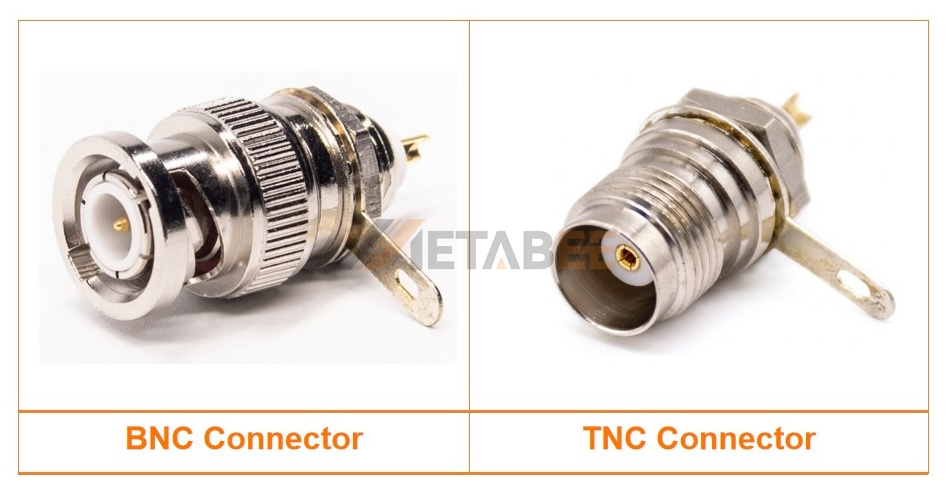
A TNC connector (Threaded Neill–Concelman) is a threaded RF coaxial connector featuring a vibration-resistant screw lock for harsh outdoor and military environments. BNC and TNC connectors share similar RF interface principles and contact configurations, but use different coupling mechanisms.
Coupling Method
BNC enables rapid manual engagement without tools, whereas TNC utilizes a threaded coupling to guarantee high mechanical retention and prevent rotational play.
- BNC Connectors: Quarter-turn bayonet lock (Quick, tool-free push-and-twist interface)
- TNC Connectors: Threaded coupling (Standard 7/16-28 UNEF thread; requires multi-turn rotation)
Frequency Range
BNC is prone to signal leakage at higher frequencies due to interface movement, whereas TNC’s rigid threaded connection maintains consistent electrical contact up to high RF bands.
- BNC Connectors: DC to 4 GHz
- TNC Connectors: DC to 11 GHz
Vibration & Environmental Resistance
BNC can suffer micro-disconnections under harsh movement, whereas TNC ensures reliable signal continuity in rugged and dynamic environments.
- BNC Connectors: Moderate vibration resistance (Best suited for static indoor environments)
- TNC Connectors: High vibration and shock resistance (Prevents accidental decoupling under mechanical stress)
Primary Applications
BNC is optimized for rapid cable swapping in indoor test setups, whereas TNC is preferred for permanently installed outdoor or vehicle-mounted RF systems.
- BNC Connectors: Benchtop test equipment, indoor CCTV, and video broadcast hardware
- TNC Connectors: Military radios, outdoor cellular antennas, aviation electronics, and maritime hardware
Related Post: BNC vs TNC Connector: Key Differences and Applications
BNC vs SMA Connector
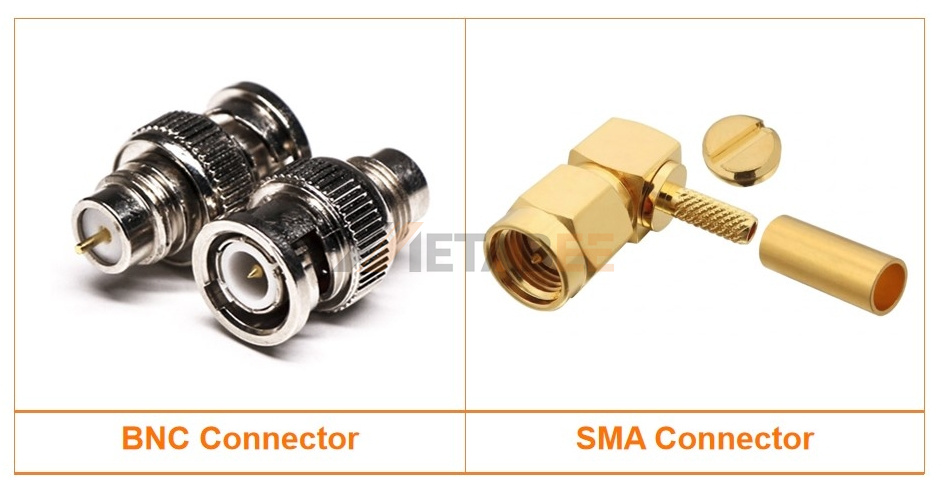
An SMA connector is a sub-miniature threaded RF connector engineered for microwave applications up to 18 GHz. While BNC prioritizes quick, tool-free connection at lower frequencies, SMA provides a compact alternative for space-constrained, high-band designs.
Size & Coupling Method
BNC uses a larger body for quick manual locking, whereas SMA features a compact sub-miniature housing that fits high-density PCB layouts.
- BNC Connectors: Miniature size; tool-free bayonet coupling
- SMA Connectors: Sub-miniature size; threaded coupling; a wrench may be required for secure tightening.
Frequency Range & Impedance
BNC is restricted to lower RF frequencies, whereas SMA operates seamlessly into microwave bands due to its precise threaded interface.
- BNC Connectors: DC to 4 GHz; 50 Ω and 75 Ω
- SMA Connectors: DC to 18 GHz; 50 Ω
Primary Applications
BNC serves general video and lab testing, whereas SMA dominates high-frequency wireless and radar hardware.
- BNC Connectors: Lab oscilloscopes, broadcast video, and CCTV monitors
- SMA Connectors: Wi-Fi antennas, cellular base stations, RF modules, and radar systems.
Related Post: SMA vs BNC: 7 Key Differences You Need to Know
BNC vs N-Type Connector
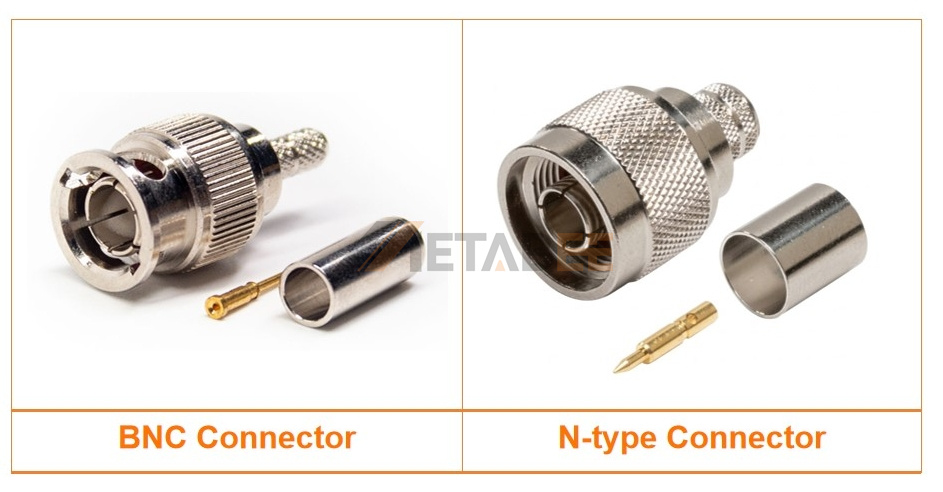
An N-Type connector is a heavy-duty, medium-sized RF connector engineered for high-power, weatherproof outdoor applications. While BNC favors lightweight, tool-free operation for indoor instruments, N-Type delivers a ruggedized, high-power alternative for demanding infrastructure.
Size & Coupling Method
BNC uses a compact housing with a tool-free bayonet lock, whereas N-Type employs a significantly larger, heavy-duty body with a fine-pitch threaded interface.
- BNC Connectors: Miniature size; quick quarter-turn bayonet lock
- N-Type Connectors: Medium size; threaded coupling (5/8-24 UNEF thread)
Power Handling Capacity
BNC is restricted to low-to-moderate signal levels, whereas N-Type features an air-dielectric contact design built to handle high continuous RF wattage.
- BNC Connectors: Low-to-medium power (Typically under 100 W)
- N-Type Connectors: High power handling (Up to several kilowatts at lower frequencies)
Frequency Range & Weatherproofing
BNC provides basic shielding for indoor environments, whereas N-Type offers extended frequency capability along with built-in weather sealing for harsh outdoor deployment.
- BNC Connectors: DC to 4 GHz; standard unsealed housing
- N-Type Connectors: DC to 11 GHz; IP67/IP68 weather-sealed options
Primary Applications
BNC caters to indoor signal routing and testing, whereas N-Type serves as the primary standard for high-power wireless infrastructure.
- BNC Connectors: Lab oscilloscopes, indoor CCTV, and broadcast monitors
- N-Type Connectors: Cellular base stations, high-power transmitters, outdoor antennas, and satellite dish feeds.
Group 2: Classic Video & Consumer Audio/TV Connectors
While BNC, F-Type, and RCA connectors all carry coaxial audio and video signals, they differ significantly in locking mechanism, impedance precision, and target market—as evaluated below.
BNC vs F-Type Connector
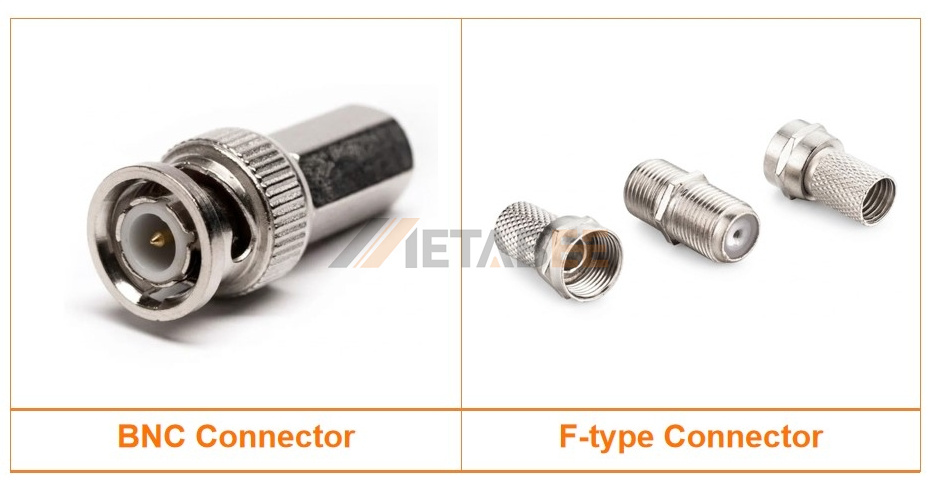
An F-Type connector is a low-cost, 75-ohm threaded interface built for residential TV, cable broadband, and satellite networks. While both carry coaxial video, BNC is a precision broadcast connector, whereas F-Type is a mass-market residential connector.
Coupling & Pin Architecture
BNC uses an integrated internal pin with a quick bayonet lock, whereas F-Type relies on a threaded collar and uses the cable's solid copper core directly as its male pin.
- BNC Connectors: Quick quarter-turn bayonet lock; precision-machined internal pin
- F-Type Connectors: Threaded collar (3/8-32 UNEF); uses cable core directly as pin
Frequency & Impedance
BNC operates across broader RF bandwidths with flexible impedance options, whereas F-Type is optimized for sub-3 GHz residential distribution in strict 75-ohm systems.
- BNC Connectors: DC to 4 GHz; 50-ohm / 75-ohm
- F-Type Connectors: DC to 3 GHz; 75-ohm only
Primary Applications
BNC is the standard for professional media and test environments, whereas F-Type dominates consumer home television and broadband infrastructure.
- BNC Connectors: HD-SDI broadcast production, commercial CCTV, and laboratory test instruments
- F-Type Connectors: CATV cable boxes, satellite receivers, and broadband cable modems
BNC vs RCA Connector
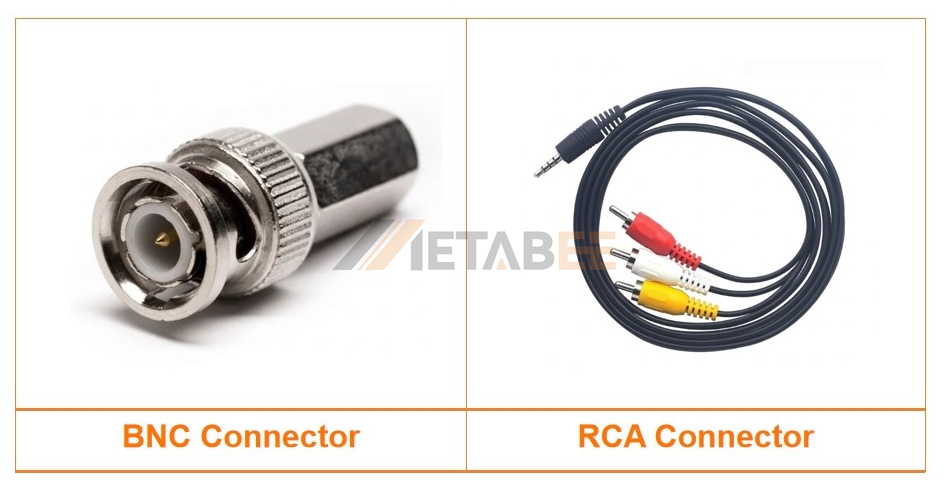
An RCA connector is a push-fit consumer interface designed for line-level audio and legacy analog video. While both route basic video, BNC provides a secure, impedance-matched lock, whereas RCA relies on a basic friction fit restricted to low frequencies.
Coupling Method
BNC uses a twist-lock bayonet mechanism, whereas RCA relies on a basic friction fit.
- BNC Connectors: Quarter-turn bayonet lock; highly secure retention
- RCA Connectors: Push-fit friction lock; prone to accidental disconnects
Frequency & Impedance
BNC provides precise impedance matching up to multi-GHz frequencies, whereas RCA lacks controlled impedance.
- BNC Connectors: DC to 4 GHz; true 50-ohm / 75-ohm constant impedance
- RCA Connectors: DC to <100 MHz; non-constant impedance
Primary Applications
BNC is the standard for mission-critical professional video and test equipment, whereas RCA is commonly used in consumer audio/video equipment and legacy electronic systems.
- BNC Connectors: Professional SDI video, commercial CCTV surveillance, and laboratory oscilloscopes
- RCA Connectors: Home stereo receivers, legacy DVD players, and consumer TVs.
Related Post: BNC vs RCA: What Are the Differences and Which Connector Should You Choose?
Group 3: Automotive & High-Density Micro-Electronics
Automotive and high-density micro-connectors—such as FAKRA, MCX, and MMCX—share coaxial fundamentals with BNC. However, they are engineered for unique demands in mechanical keying, footprint size, and vibration resistance—as evaluated below.
BNC vs FAKRA Connector
A FAKRA connector is an automotive-grade SMB-based coaxial interface featuring color-coded plastic housings, mechanical keying, and secondary locking latches. While BNC suits general RF systems, FAKRA is built for mistake-proof, vibration-resistant vehicle assembly.
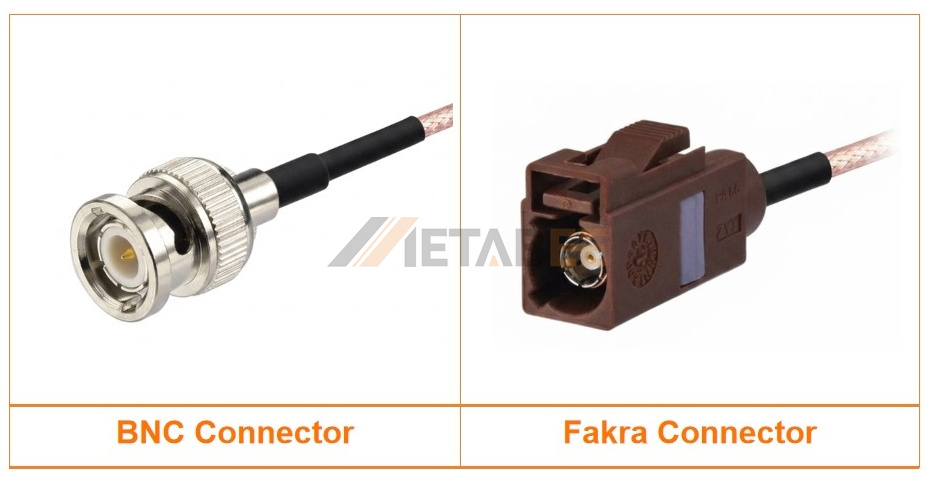
Coupling Method
- BNC Connectors: Tool-free metal bayonet twist-lock; highly durable for manual test setups
- FAKRA Connectors: Push-on SMB core with color-coded keying and secondary locking latch; prevents assembly mis-mating
Frequency & Impedance
- BNC Connectors: DC to 4 GHz; 50-ohm / 75-ohm
- FAKRA Connectors: DC to 6 GHz; 50-ohm only
Primary Applications
- BNC Connectors: Test instruments, oscilloscopes, CCTV, and broadcast video
- FAKRA Connectors: Automotive ADAS cameras, GPS navigation, satellite radio, and cellular telematics.
Related Post: What is a FAKRA Connector? Technical Specifications, Color Coding, and RF Performance
BNC vs MCX & MMCX Connectors
MCX and MMCX are ultra-compact snap-on RF connectors engineered for high-density PCBs where space and weight are strictly limited. BNC offers a robust interface for manual handling. MCX and MMCX have smaller interfaces for space-constrained equipment and support both cable and PCB configurations.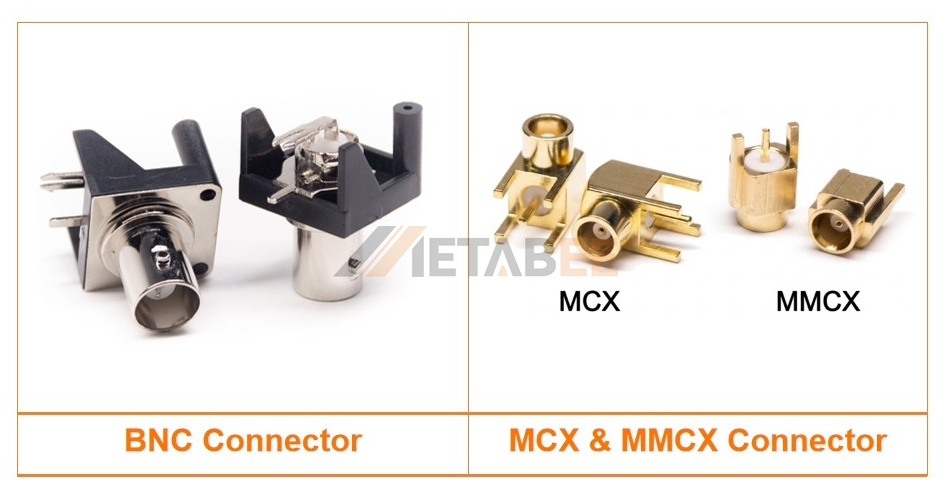
Size & Coupling Method
- BNC Connectors: Miniature Connector with quarter-turn metal bayonet lock
- MCX / MMCX Connectors: Micro-miniature with snap-on mechanism (MMCX is ~35% smaller than MCX)
Frequency & Impedance
- BNC Connectors: DC to 4 GHz; 50-ohm / 75-ohm
- MCX / MMCX Connectors: DC to 6 GHz; 50-ohm (75-ohm variants exist for MCX)
Primary Applications
- BNC Connectors: Oscilloscopes, test benches, and legacy broadcast gear
- MCX / MMCX Connectors: Compact IoT modules, drone flight controllers, handheld radios, and high-density PCB assemblies
How to Choose the Right Coaxial Connector?
Once you understand these connector differences, evaluate your project's specific requirements. METABEE's technical support team recommends assessing electrical, mechanical, and environmental factors before finalizing your BOM (Bill of Materials).
Consider the Application
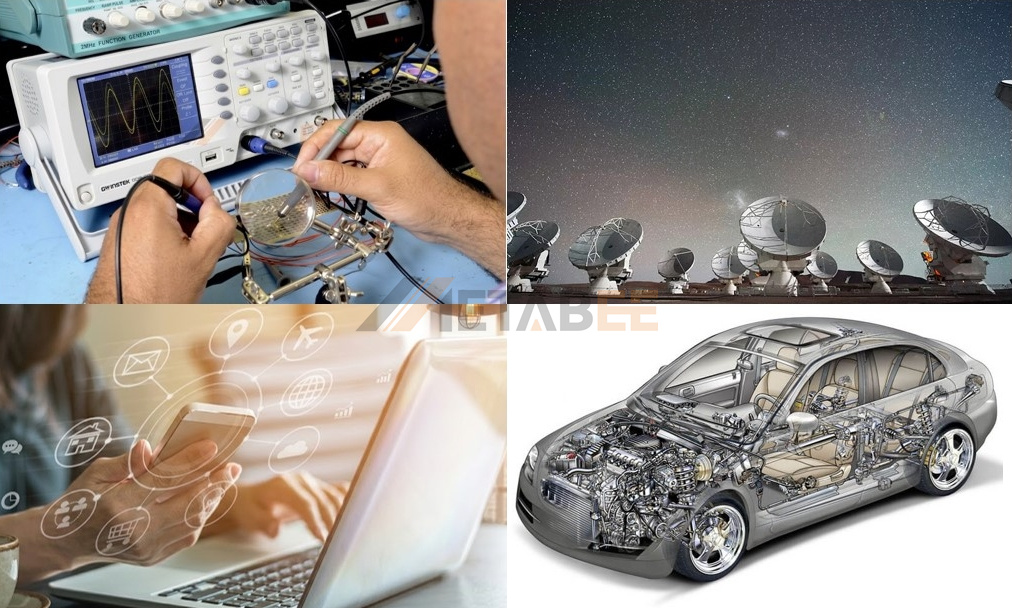
Start by identifying the application and its specific requirements before choosing a coaxial connector.
Consider:
- Test and measurement: BNC is commonly used with oscilloscopes, signal generators, and other test equipment.
- RF and wireless: SMA, TNC, and N-Type connectors can suit RF systems with specific frequency and mechanical requirements.
- TV and consumer electronics: F-Type and RCA are widely used for television, cable, audio, and video equipment.
- Automotive applications: FAKRA is widely used in GPS, telematics, infotainment, camera, and ADAS systems.
- Compact electronics: MCX and MMCX are designed for space-constrained RF and wireless devices.
Consider Impedance and Frequency
Impedance and frequency directly affect signal transmission. Common coaxial systems use 50Ω or 75Ω, so the connector must match the requirements of the equipment and cable.
When selecting a connector, check:
- Required impedance
- Operating frequency range
- Signal type
- Insertion loss and return loss for higher-frequency applications
Consider Connection Method
The coupling method affects connection speed and mechanical retention. BNC uses a quarter-turn bayonet mechanism for quick mating, while SMA, TNC, and N-Type use threaded connections for stronger retention. MCX and MMCX use snap-on connections for compact applications, while FAKRA uses keyed and locking features for automotive systems.
Choose the connection method based on how frequently the connector will be mated and how much vibration or movement it will experience.
Consider Size and Environmental Requirements
Physical size matters when installation space is limited. BNC is larger than some connectors such as MCX and MMCX, but its size also makes manual mating easier.
For demanding environments, also consider:
- Vibration and mechanical stress
- Moisture and weather exposure
- Operating temperature
- Mating durability
- Cable and mounting requirements
Quick Selection Matrix
|
Selection Scenario |
Primary Decision Factor |
Recommended Connector |
Alternative Option |
|
Test & Measurement Equipment |
Rapid connect/disconnect, frequent manual mating |
BNC |
TNC (for higher frequency and retention) |
|
RF Systems & Antennas |
High retention strength, stable high-frequency performance |
SMA |
N-Type (high power / rugged), TNC |
|
High Vibration / Outdoor Environments |
Threaded coupling, mechanical durability, weather resistance |
N-Type |
TNC |
|
Automotive Electronics / ADAS / GPS |
Color-coded keying, mechanical latching, vehicle standards |
FAKRA |
Mini-FAKRA |
|
Space-Constrained Board-to-Board / Devices |
Ultra-miniature footprint, quick snap-on mating |
MMCX |
MCX |
|
Consumer Audio/Video & Cable TV |
Low-cost standard consumer connectivity |
F-Type (Video/Cable) |
RCA (Audio) |
Conclusion
Beyond standard BNC connectors for video and test setups, METABEE provides a comprehensive spectrum of coaxial solutions for industrial and RF applications. Our portfolio includes high-performance SMA, TNC, N-Type, F-Type, FAKRA, MCX, and MMCX connectors.
When choosing a coaxial connector, consider the application, impedance, frequency range, connection method, size, and environmental conditions. Comparing these factors with the specifications of the exact connector model can help ensure reliable performance and proper system compatibility.
Contact our engineering team today to discuss custom RF cable assemblies, specialized connector plating, and bulk component sourcing tailored precisely to your project requirements.
Related Products
FAQs
Q1: Is BNC a coaxial connector?
Yes. BNC is a specific type of coaxial connector that uses a bayonet coupling mechanism.
Q2: What are the disadvantages of BNC connectors?
BNC connectors can require more installation space than smaller coaxial connector types such as SMA, MCX, and MMCX. Their bayonet coupling also provides less mechanical retention than threaded designs, which may make threaded connectors more suitable for applications exposed to continuous vibration.
Q3: Is BNC better than SMA?
Neither connector is universally better. BNC offers quick bayonet coupling, while SMA provides a smaller threaded interface commonly used in RF applications. The choice depends on the system requirements.
Q4: Can BNC connectors be used with coaxial cables?
Yes. BNC connectors are commonly used with coaxial cables. The connector and cable should have compatible impedance, size, and electrical specifications.
Q5: How do I choose the right coaxial connector?
Consider the application, impedance, frequency, connection method, physical size, and environmental conditions. Then verify the specifications of the specific connector model.
